
Blog
Scroll down to view all posts, or view our archive to view blog post titles over time.
Caregiver versus Care Partner
You have been caring for a loved one (LO) for a day, week ,month or more than a year and you are unsure how you got into this spot and how long will it last. When your LO became ill and needed care, many individuals offered to help but as time progresses, they return to their lives and you are now the caregiver fulltime. You love this person, that is not the issue but you also need a caregiver for yourself.
Being a caregiver can be both rewarding and yet challenging at the same time. Once Rick and I moved to the phase of long-term adjustments, my role became that as a Care Partner.
You have been caring for a loved one (LO) for a day, week, month, or more than a year and you are unsure how you got into this spot and how long will it last. When your LO became ill and needed care, many individuals offered to help but as time progressed, they returned to their lives and you are now the caregiver full-time. You love this person, that is not the issue but you also need a caregiver for yourself.
Being a caregiver can be both rewarding and challenging at the same time. Once Rick and I moved to the phase of long-term adjustments, my role became that of a Care Partner.
The Difference Between Care Partner and Caregiver
Caregiver
Role: Stepping into the shoes of a caregiver means providing hands-on healthcare and assistance. It's about attending to daily tasks, ensuring medication routines, aiding in mobility, and sometimes, doing things that the other person could once do independently.
Relationship Dynamics: It’s undeniably a role where you're giving a lot, often placing the needs of the other before your own. It can sometimes feel like a one-way flow of energy, especially when the weight of the responsibility feels immense.
Identity: Many of us, as caregivers, find ourselves so immersed in this role that it starts to shape our identity, consuming significant slices of our time and emotional bandwidth
Care Partner
Role: As a care partner, I've realized that while I'm still offering assistance, I'm doing it with him, alongside him. It’s not just about care—it's about collaboration. It's about walking this journey of recovery hand in hand.
Relationship Dynamics: It's a dance of mutual respect and shared decision-making. Even though my husband's mobility and capabilities were altered, his voice, insights, and desires remain just as vital.
Identity: Adopting the term "care partner" has given us a sense of empowerment. It signifies that, even in adversity, we’re in this together, side by side.
It seems just a new name for an old one but it is also a change in mindset. When I decided that we were partners and not just caregiver, I was open to additional support and ideas to help improve both of our lives long-term.
Your LO may not be able to participate as the care partner but a friend or family member could be your second in charge.
What Helped Solidify this Role
As discussed in a previous blog, I adopted the BUT attitude. Many tasks or discussions, he is not able to fully participate in BUT many things, he can.
We can discuss an event or help needed and he is excited and wants to participate and then forgets BUT if I make a weekly list, review with him, and have him write the list, the task or the event happens. I am no longer frustrated and he feels more in control.
If LO can’t: Make a monthly list of what needs to be done, doctor's appointments, and time away for you. Send out an email to family and friends asking for support. You will be surprised, they want to help but are not sure how, but if you give them a task and time, you get a better response. The family can’t be 24-hour care BUT they can help some.
Caregiver/Care Partner Support Group - Join a group in person or on Zoom
Our support group will accept members beginning September 1. You are not alone and the following topics are discussed confidentially.
Why don’t my siblings help?
I am exhausted and burned out
What resources are available?
Discuss your life change and your day-to-day trials
You’re invitation to join the support is right around the corner.
Watch the website for updates!
Summer Heat and Dehydration
Rick’s stroke affected his taste and the ability to determine when he was hungry or thirsty. Everything tasted bad and he would go hours without eating or drinking unless I reminded him. This remains an ongoing and frustrating issue for both of us. I make a nutritious meal and he would take one or two bites and be done. I tried every recommended diet on the market with no luck.
One morning, he got out of bed a little too fast and felt dizzy. This is not uncommon; we’ve all done this, but with a stroke survivor, this is a concern. Before I could slow him down, he lost his balance and fell to the floor. He gathered himself and refused to call the MD. Although he wasn’t injured, I was concerned. Later that day, he again lost his balance and felt woozy.
Rick’s stroke affected his taste and the ability to determine when he was hungry or thirsty. Everything tasted bad and he would go hours without eating or drinking unless I reminded him. This remains an ongoing and frustrating issue for both of us. I make a nutritious meal and he would take one or two bites and be done. I tried every recommended diet on the market with no luck.
One morning, he got out of bed a little too fast and felt dizzy. This is not uncommon; we’ve all done this, but with a stroke survivor, this is a concern. Before I could slow him down, he lost his balance and fell to the floor. He gathered himself and refused to call the MD. Although he wasn’t injured, I was concerned. Later that day, he again lost his balance and felt woozy.
I immediately checked his blood pressure which was low, and a common cause of falls and dehydration. Our physician directed us to the emergency room for evaluation. An episode of dehydration can mimic a stroke when a person exhibits confusion and falls. A member of the stroke team evaluated Rick and ordered a CT scan to rule out any additional brain damage. Dehydration caused orthostatic blood pressure, which is a drop in blood pressure when standing, and that is what caused the fall. The body is amazing: when blood pressure is low, essential organs need blood flow to sustain life. Subsequently, the kidneys received less blood as the body focused on sending blood to the brain. Once rehydrated, the body returned its focus to kidney function.
Not only did I need to monitor his care but more importantly his behavior and compliance with what he needed to do. The following early signs of dehydration helped me to determine how well he was managing his fluids.
Signs to watch for…
Change in blood pressure from sitting to standing.
Headache or headrush
Dry mucous membranes
Decreased urine output or dark yellow urine. Producing lots of clear urine is a good sign of being well-hydrated.
Loss of appetite, tiredness
Fatigue
Dry or flushed skin
Chills
Constipation. Producing lots of clear urine is a good sign of being well-hydrated.
To prevent dehydration…
Drink plenty of fluids and eat foods high in water such as fruits and vegetables.
For most, thirst is a great guide if you are consuming adequate daily fluid guidelines. Many times, stroke survivors may state they are hungry when they are thirsty.
Always include fluids when eating or snacking.
You can usually reverse mild-to-moderate dehydration by drinking more fluids, but severe dehydration needs immediate medical treatment.
Call your healthcare provider if you suspect dehydration. Each survivor is different, and your healthcare provider can provide recommendations on the next steps.
Increase fluid intake if you experience the following.
Medical conditions such as flu, vomiting or diarrhea.
Hot weather. Fluids will help lower body temperature and replace what you lose through sweating.
Cold weather, Fluids help to combat moisture loss from dry air, particularly at higher altitudes.
Dehydration after a stroke increases the risk of a blood clot. If Rick doesn’t drink enough fluids, his blood thickens and begins to move slowly. The concern is that the blood can back up in a narrow or blocked blood vessel. This can then cause an additional neurological incident, such as another stroke.
He has changed BUT he is still able to do…(fill in the blank)
Many things have changed over the last few years. So many activities I took for granted on a daily basis now need additional help to accomplish. Prior to the stroke, I could count on Rick for house repairs, being my partner on outings, talking over the days events and traveling. Life still continues and we still can enjoy many activities but it is different and need to planned or initiated by me.
Hello all,
Many things have changed over the last few years. So many activities I took for granted on a daily basis now need additional help to accomplish. Prior to the stroke, I could count on Rick for house repairs, being my partner on outings, talking over the days events and traveling. Life still continues and we still can enjoy many activities but it is different and need to planned or initiated by me.
For months on end I would focus on what no longer existed in our life and remained angry and frustrated. These feelings when not dealt with are exhausting. How did I move past this? With the help of a therapist that taught me the proper use of the word BUT.
Whenever I would hear a statement followed by BUT, I knew that the statement prior was negated. For example: “She has a pretty face BUT could lose a few pounds” This is not the best use of the word BUT.
What I learned and want to share is how I now use to word BUT as a positive source in my life. For example; Something that Rick is no longer able to do followed by BUT what he can do.
Rick no longer enjoys eating out, being unable to enjoy or taste food BUT he agrees to go out anyway with friends and myself and never complains.
Once I started to look what he could do after the BUT, I started to feel more at peace and focus on the ,positive that we have in our life. The other lesson I am learning is if he or I need help, I ask myself, who can help?
We can no longer move large or heavy objects alone BUT we have family and friends that would love to help. JUST ASK!
The bottom line: Look at the BUT in your life and how can you turn that around?
Stroke and the Spouse - Be the first to know!
Big News! Stroke and the Spouse is written and currently being prepared for publishing. Please check out a sample from Chapter One.
Good Morning,
When Rick had his stroke last year, I began this journey along side of him. We have had good days and bad days but sharing my journey has helped me but also allowed me the opportunity to help others.
I am a novice writer and blogger, but when my life turned upside down, I knew that I needed and wanted to share so that others could have an easier path. This journey has allowed me to grieve, cry but also find joy. When I share with you, I am also able to heal me as well.
My book “Stroke and the Spouse” started as a journal of my feelings and soon developed into a workbook of experiences, support, resources, tools and a guide to help you or someone you love deal with the change in their life.
The book is in the final stages and will soon be available for purchase. I am hoping to have the book available this summer. If you would like to be on the preorder a copy, please provide your email on the home page.
What you can expect.
Now that I have completed the writing portion of “Stroke and the Spouse”. I am now able to focus on providing weekly Wednesday updates to all of you. The previous post provided an example of what resources, thoughts and support provided.
Within the next two weeks, the resource page will be open for you to browse and order tools that will help you along your journey.
Book Sample
Chapter One: Something is very Wrong.
Journey from Stroke through ICU
Something is very wrong; those four words changed my life from a spouse to a Caregiver and took me on a journey that I was not prepared to handle or didn’t want to handle. I had plans for my future, and it did not include caregiving.
When my husband, Rick, walked in from the garage stumbling and a bit confused, I was sure that his blood sugar was low. Looking back, I realized that denial and fear can play tricks on your thinking. As his arms flapped uncontrollably, I realized what was happening, and I made the dreaded 911 call that I never wanted to make.
“Get here quick, my husband is having a stroke!”
The operator needed details on what I was observing and other questions. To this day, I am not sure what the operator asked. All that I knew was I needed help quick. Within minutes, the paramedics arrived and minutes later they were racing away with Rick toward the hospital. As I stood in the driveway, emotions flooded in. Would this be our last day together? Why is God doing this? What the hell is happening? My heart was racing, my stomach was in a knot, and tears streamed down my cheeks. I will never know hHow I made it to the hospital in one piece I will never know. I now believe that God was with me, even though I was so angry at Him.
Fumbling and stumbling—that was me. I tried to call family and friends but and my mind and fingers just would not work. Finally, I reached out to my best friend and my children. There was something about articulating saying what happened that made it real. At that moment, I realized life had changed and there was no going back to before. It would divide our life into “before the stroke” and “after the stroke.”
The ER
Within twenty minutes of the stroke, Rick was in the emergency room being treated by the stroke team. During those first few hours, I was in and out of Rick’s emergency room, updating friends and family. Meanwhile, Rick was being evaluated frequently by being asked questions regarding people, places, and time.?
We were never alone to communicate privately, so we relied on but with non-verbal cues and attempts at humor to downplay this crisis. As I walked into the room, the team asked Rick, “Do you know who this woman is?” Without a pause, He answered, “I have never seen this woman in my life.” The staff looked at each other in panic. I knew it was Rick’s way of telling me he was still with me. “Knock it off,” I said, and told the staff he has a terrible sense of humor. Only Rick and I saw the humor. Prior to his stroke, this was his normal sense of humor, so when he said this, I knew that not all hope was lost, and that part of his personality was still intact.
Rick was getting the care he needed and was the primary concern, but I was in shock and really did not know how I functioned or if I functioned those first twenty-four hours. As I watched him cling to life, all I could do was pray and question everything I had missed. I am a nurse; how did I miss that he could have a stroke? What caused this? He cut the grass that morning. What if he doesn’t survive? What if he does?makes it? WAnd what kind of care will he need?
Over the next few weeks, Rick was in the intensive care unit fighting for his life. Because of COVID restrictions, they limited visitors to two. The kids took turns, but it was a hard time juggling my full-time job, ongoing medical decisions for Rick, providing information to family and friends and attempting to prepare the family for what was ahead.
Friends and family bombarded me with, “What do you need? How can I help?” Honestly, I was so overwhelmed, I did not know what I needed other than someone to turn back time. T. If someone could turn back time, that would have been very helpful.
Who am I?
As a nurse and case manager for more thanover thirty years, I thought I was well-equipped they would well equip me to handle any health crisis my loved one experienced. I have helped many patients and families over the years make that transition from their crisis to home. But I learned that when it happens to you, all that you think you know goes out the window. This is a unique experience that you alone will experience, but I have discovered real life solutions that can help you avoid the pitfalls, and can offer that perspective, with the bonus of a nurse’s lens. You are not alone and no matter how you are feeling, that is ; it is exactly what you should be feeling. have felt.
New Role
Someone in the United States has a stroke every 40 seconds. Every 4 minutes, someone dies of a stroke. Every year, more than 795,000 people in the United States have a stroke and 795,000 Caregivers are born. When Rick experienced his stroke, so did I.
As I sat by his bedside and watched the flurry of activity around him, I wondered about my “new role.” As a nurse, I could advocate for his care and ask questions. But as his wife, I was hungry for any positive tidbit on his progress. That, unfortunately, was hour to hour, as well as an up and down journey.
Life works in funny ways. I am a big fan of the show “Criminal Minds,” a show focused on serial killers. I know it is weird, but it’ is my guilty pleasure. One morning, after the tenth CT scan looking for issues, my daughter entered the room all excited. “Mom, guess what? In the next room, they handcuffed a man to his bed and a police officer is guarding his room. This could be a dream come true–a serial killer and a crime you could help solve.” I could not get to the hall fast enough to casually asked the police officer, “So hey, I see you are guarding someone. Do you think he is a serial killer? I could help, I watch Criminal Minds.?”
Yes, I had lost my mind, but when you have not slept or eaten, this is what you do. I really cannot put into words the look I received from the officer, but I bounced back into Rick’s room and stayed put. Looking back, I know I could have solved the mystery of this crime.
Although my life has come to a halt and living moment by moment, the world continues, bills need to be paid, decisions made, and the feeling of being alone without your loved one being able to take part is heart breaking.
Care for the Caregiver
Did you wake this morning thinking what does the day have planned for me? Medication given, food made, Blood pressure checked and planning the days activities. But what about you?
After eighteen months of attending so many medical appointments with Rick, I had my medical checkup. As I sat with my doctor, I realized how my health was impacted and neglected. Stress has a negative impact on your health, and I am living proof.
Dear Spouse and Caregiver,
Did you wake this morning thinking what does the day have planned for me? Medication given, food made, Blood pressure checked and planning the days activities. But what about you?
After eighteen months of attending so many medical appointments with Rick, I had my medical checkup. As I sat with my doctor, I realized how my health was impacted and neglected. Stress has a negative impact on your health, and I am living proof. At the end of the appointment, I needed to address having high blood pressure for the first time, elevated cholesterol, needing a test (endoscopy) for GI issues (later determined to be three ulcers). On top of all of that, there was a flood of tears when the doctor asked “How are you doing? Has this been a rough time?”
Alone in my car, I realized that my health had suffered and that if I continued, I would be of no value to myself, Rick, or my family. And I’m here to tell you: Don’t let YOU go. You are critical to the wellbeing of the stroke survivor, but more importantly, you are not only a spouse and a caregiver but someone of value who has much to offer the world.
Taking Care of your physical health
This has been an exhausting journey and time seems to fly by. The caregiver is busy with the care of the survivor that they forget that their health matters just as much or more. We need to stay healthy so we can provide the care needed.
Key preventative measures that impact your health are listed below. When speaking with your healthcare provider, ask for an individualized plan of care.
Are you up to date on the following preventative measures?
Medication - Are you taking medications as prescribed? Are you finding you are taking over the counter medications for symptoms versus seeing your MD?
Blood pressure - What is your current BP? Is it within the normal range? When was the last time this was checked?
Cholesterol - What is your cholesterol level?
Cancer Screenings - When was your last Mammogram or Colonoscopy?
Well Visit with your Medical Doctor, OB/GYN, eye doctor or dentist -schedule for the new year
Routine Vaccinations such as shingles, flu shot or Covid booster.
As caregivers and people, we need to have all three aspects of life working together, Physically, Mentally and Spiritually. At any given time, one aspect may be out of kilter, but overall, when all three are addressed, joy and peace ensue. Next week I will address the mental aspect of care for the caregiver.
Stroke and the Spouse – Season of Change Update:
The book is currently under review by a group of readers to determine if it flows, does it meet the goal to help others, what could be added and overall recommendations. Once I have that feedback, I will edit.
The goal is to have it available this summer.
Love from spouse to spouse

Happy New Year
The last year and a half have been challenging but also a time of growth. The pain, sadness and loss were all around me and yet God provided an outlet for me, my upcoming book, and this website. Like me, a caregiver, your life changes daily and you need to adapt. Being able to adapt is the key to survival but I no longer want to only survive but to be able to find joy in our new life together.
Dear Spouse and Caregiver,
The last year and a half have been challenging but also a time of growth. The pain, sadness and loss were all around me and yet God provided an outlet for me, my upcoming book, and this website. Like me, a caregiver, your life changes daily and you need to adapt. Being able to adapt is the key to survival but I no longer want to only survive but to be able to find joy in our new life together.
What I have learned is that it is important to reconnect and to be able to share your journey. When we share, we can let go of the pain and find ways to see the joy around us.
As the calendar changed from 2022 to 2023, I needed to dig deep to determine the type of life and year Rick and I would have. As I sat before God and opened my heart. I realized that I need to take care of me so that I can care for others. We decided, we no longer wanted to observe life but to live it.
As I challenge myself, I also challenge you…
· Pick a word that will define your approach to life this year. I chose the word GRATITUDE. To be able to look at each challenge, event, or setback with appreciation that I can be there for that person versus needing the care myself. This is not an easy task.
· Change your mindset. Before and while I am working on being grateful I needed to look back at the post stroke phase of life and the life changes that I can now appreciate.
To love my spouse in a much deeper way. When I thought he would die, I replayed all that I would miss. The laughter, the banter, the private jokes, and his quirks.
Being able to retire. I had prayed for decrease stress and to have more time for family and friends. I had always worked, and it was scary to think of not working. Even though my retirement was not planned, my prayer was answered. I was able to help my family, spend more time with friends and have the time to focus on Rick without being pulled away by work.
Impact the lives of others. This has always been a calling for me. But I never had the time or felt that I had an impactable moment to share. The crisis made me again dig deep on how to handle life changes, how to use my nursing knowledge, how to use my faith and to share so others could benefit. Hence, the upcoming book and website.
Together, you and I will navigate this new year successfully. Of course, we will have bad days and want to give up but I beg you to stop and look at the situation with gratitude. The gratitude maybe as simple as “ this day is terrible but I can share with a friend”
Stroke and the Spouse – Season of Change Update:
The book is currently under review by a group of readers to determine if it flows, does it meet the goal to help others, what could be added and overall recommendations. Once I have that feedback, I will edit.
The goal is to have it available this summer.
Love from spouse to spouse
Grief and Renewal
I have not posted in a few weeks due to a death in the family. Rick’s Mom passed away at the age of 92. A wonderful and peaceful death. Being a caregiver to her and being with her as she was transitioning from life was an honor and an opportunity to resolve issues in the relationship. It is so important to have no regrets as to words unsaid or actions undone.
Dear Spouse and Caregiver,
I have not posted in a few weeks due to a death in the family. Rick’s Mom passed away at the age of 92. A wonderful and peaceful death. Being a caregiver to her and being with her as she was transitioning from life was an honor and an opportunity to resolve issues in the relationship. It is so important to have no regrets as to words unsaid or actions undone.
But, as you all are aware, I still have my husband to care for. Rick is doing much better physically, still has low endurance but overall better. Mentally, he can do most things that he did prior to the stroke but his short-term memory and ability to engage with others is limited. These changes, although not ideal, are easier for me to handle versus the emotional changes he has experienced.
After the initial stroke, Rick shared that he was an observer of his life. The Neurologist told me that this was not unusual and that it should improve with time. It has not improved and further developed into depression and apathy. We are working closely with our doctor to treat medically but this could very well be his future state.
I have no words of wisdom on how to handle as a spouse. It changes daily and I am just trying to keep my head above water. As a nurse, I understand that this is not him but his stroke, but my heart aches for my partner. The grief of this loss is ongoing but together we can navigate the pain.
Grief is defined as deep sorrow, especially caused by someone’s death. The grief I feel is the loss of the person I love that is now a shell of himself. God does provide glimpse of my pre stroke Rick, and I hold onto that. Our granddaughter came into town for the weekend and helped decorate the outside of the house. Her plan was a winter wonderland with many blowups. Rick was happy and excited to follow her decorating design and never said NO to any blowup. Our house looks crazy on the outside with 10 Christmas blowups and multiple lights but the joy of my granddaughter and Rick helps me to get through the holidays.
What I have learned and want to share is that you can not do this alone. The man I use to talk to is no longer an emotional option. My flaw is that I think if I work hard enough at something< alone, I can fix it. This I can not fix and realized that it is time to seek a professional to help with the grief and changes in both of our lives.
I am blessed that Rick is still with me and that we still can laugh and enjoy life to a certain degree. All relationships evolve over the years, ours evolved at light speed post stroke but we are learning how to make the most of our days.
Today, I attended my godson’s daughters baptism and the renewal that life and love continue. That we all come into this world with absolutely no expectations and 100% dependent on the love of God and others. To be that child again would be wonderful but my life experiences would be behind me and what a great loss.
My only words of wisdom this week, seek help when needed and start each day as that innocence child of God and let Him lead.
Love from spouse to spouse
Holiday Survival
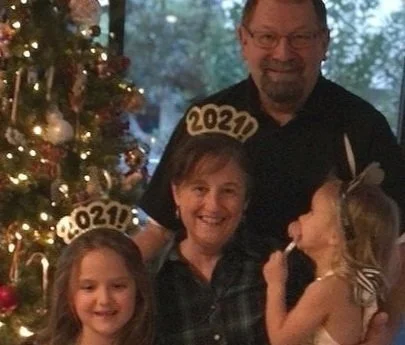
I love to entertain and have a house full of guest. Rick and I would start planning early. He would decorate the outside and I would do the inside. Like all couples, I did the shopping but we would joke, he was mt last minute man. I could always count on him to run to the store numerous times to get that one ingredient that I forgot. He would laugh and never complain.
Dear Spouse and Caregiver,
I hope that you all had a wonderful week and have found time for yourselves. We are starting to enter the holiday season and my typical activities have changed.
I love to entertain and have a house full of guest. Rick and I would start planning early. He would decorate the outside and I would do the inside. Like all couples, I did the shopping but we would joke, he was my last minute man. I could always count on him to run to the store numerous times to get that one ingredient that I forgot. He would laugh and never complain.
The holidays have changed since Rick had the stroke, his desire to fully participate has left but he still loves when the kids and grandkids arrive. The first year after the stroke, I set myself up. I was convinced that the holidays didn’t need to change - I could do it all.
I did my best but by January 2, I was tired, crabby and depressed that it didn’t go as planned. So this year, I have a much simpler plan.
Holiday Survival Plan
Review what you want to give. After the year we had, the gift of being together is so much more important than the latest gadget. I was worried that the family would be upset with the change - they were thrilled.
·Shop early and wrap those gifts when you bring them home. This has helped with the last minute crazy of wrapping and also keeping track of what you bought. Every Christmas, I would always have a gift tucked away that I forgot.
Instead of gifts, give experiences. With Rick’s limitations and health scare, memories made will last longer than a gift.
Others love to entertain as well. Be gracious and enjoy the holidays at another’s home. It is a gift to them to be able to celebrate with you.
Decorations at the house. This year, Rick will be supervising the outside lights. Plan a family day to decorate, serve chile and dessert. This will be a new tradition.
Plan for naps. Schedule the holiday celebrations to include rest. Rick can handle about 2 hours at a time in larger groups.
Do not over plan. Not every tradition from the past needs to be carried over. Really, How many cookies do I need to bake and eat? Does dinner need to be a sit down dinner or appetizers through out the day? Do you need to see everyone over those few days? Spread out visits and fun over a longer period of time so that everyone can enjoy.
Lastly, the season is not about what you did but rather the birth of Jesus. Celebrate the love He provides and be grateful for all of your blessings.
Welcome
Welcome to my journey and I am excited that you will be joining me. My plan is to post every week with a new topic. I would love to hear your concerns and questions that I can help to address in this blog. Sign up for my newsletter so I can be a support that has been right there in the front lines with you.
With love from spouse to spouse,
What do I need to know?
I have been the spouse of a stroke survivor for about two years. On the day that Rick had a stroke, I could not see past the crisis. I was angry, sad and frightened. My world was falling apart and I had no idea what to do. As a nurse, I knew all the medical aspects and that really helped to navigate the medical care and decisions that need to be made but it did not prepare me for the emotional aspect of being the spouse.
Dear Spouse and Caregiver,
I have been the spouse of a stroke survivor for about two years. On the day that Rick had a stroke, I could not see past the crisis. I was angry, sad and frightened. My world was falling apart and I had no idea what to do. As a nurse, I knew all the medical aspects and that really helped to navigate the medical care and decisions that need to be made but it did not prepare me for the emotional aspect of being the spouse. I could not go home at the end of my shift as I had as a nurse, this crisis followed me everywhere.
Every experience is different but what I learned and experienced, I feel will help you and your friends and family better navigate the journey. During the first phase of Rick’s care being in the hospital and not knowing from day to day the outcome was very difficult. Waiting on the doctor’s every word for some positive news is exhausting. They always asked “Do you have any questions?” As a nurse, I knew what to ask but I saw many family members at a loss and would just thank the team for what they received.
What should I ask the MD?
· What type of stroke has your loved one had?
· What is the extent of damage?
· What part of the brain was impacted? What does that mean?
· What is the plan of care?
What milestones are we looking for?
What can I expect in the first 24 hours and 48 hours?
Someone in the United States has a stroke every 40 seconds. Every 4 minutes, someone dies of a stroke. Every year, more than 795,000 people in the United States have a stroke and 795,000 caregivers are born.
When Rick experienced his stroke, so did I.
Although your life has come to a halt and you are living moment by moment, the world continues, your bills need to be paid, decisions made, and the feeling of being alone without your loved one being able to participate is heart breaking.
The caregiver is the neglected/forgotten stepchild in our society when a spouse suffers a health crisis, and he/she needs information, support, and resources to heal from the event so that the couple can establish a fulfilling, even joyful new normal.
Welcome
Welcome to my journey and I am excited that you will be joining me. My plan is to post every week with a new topic. I would love to hear your concerns and questions that I can help to address in this blog. Sign up for my newsletter so I can be a support that has been right there in the front lines with you.
With love from spouse to spouse,
The Journey Begins
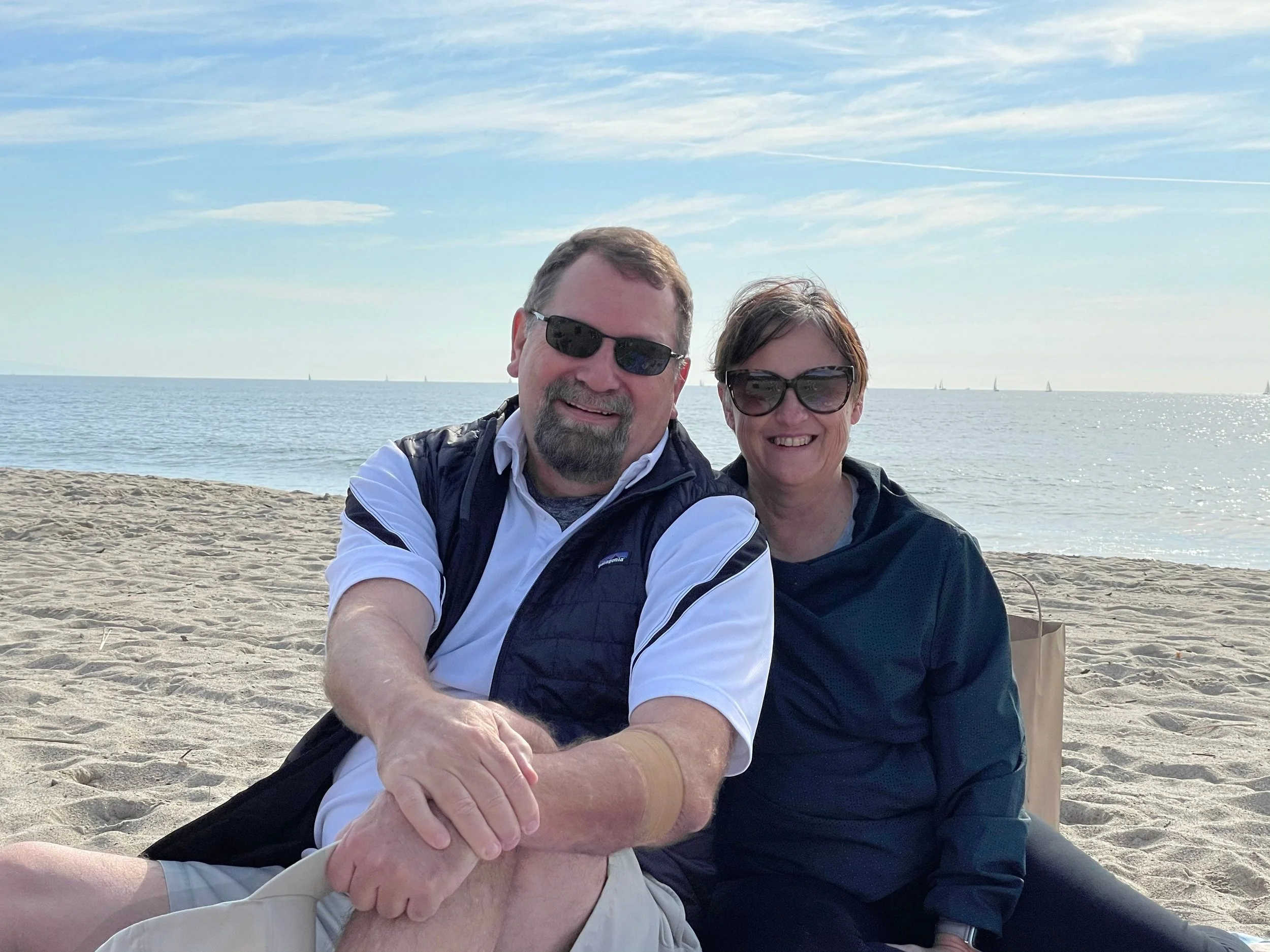
Your head is spinning, and you are unsure what is next. I have been that spouse in the waiting room chair looking around the room thinking “How the heck did I end up here?” Unsure of what is happening to your loved one and what if any future you will have together.
Dear Spouse and Caregiver,
Your head is spinning, and you are unsure what is next. I have been that spouse in the waiting room chair looking around the room thinking “How the heck did I end up here?” Unsure of what is happening to your loved one and what if any future you will have together. My husband, Rick, experienced a stroke on June 23, 2021 and that is when our life turned upside down.
“Something is very wrong!”
Those 4 words changed my life from a spouse to a caregiver and took me on a journey that I was not prepared to handle or didn’t want to handle. I had plans for my future, and it sure did not include caregiving. Over the next year and half, together we went from being near death in the ICU to learning to walk and adjust to Rick’s new limitations.
Will I be a widow or a wife?
This was a constant thought. At first, the concern was would he live each day but as time passed the meaning of being a widow changed. In so many ways, we had to grieve the lost of our planned life and our current marriage dynamics. I soon learned that never being alone does not prevent the grief or the loneliness.
We as spouses and caregivers need to walk the journey together.
Very little support was available to help me through this transition. Family and friends love and care but after time they will move on. This is not a negative but a way of life. With this website and upcoming book “Season of Change” I hope to be able to better help you navigate the practical needs of a caregiver, provide support of your fears, your spiritual frustrations and care for yourself.
Anger and resentment
Anger and resentment is a real emotion that we all need to address. I was angry at the world and with God. Over the last 2 years, I have developed some positive coping strategies to those feelings and developed a life that, not ideal, is satisfying.
Welcome
Welcome to my journey and I am excited that you will be joining me. My plan is to post every Wednesday with a new topic. I would love to hear your concerns and questions that I can help to address in this blog. Sign up for my newsletter so I can be a support that has been right there in the front lines with you.
With love from spouse to spouse,