
Blog
Scroll down to view all posts, or view our archive to view blog post titles over time.
Caregiver Burnout
Caregiver burnout is a state of physical, emotional, and mental exhaustion that happens while you’re taking care of someone else. Stressed caregivers may experience fatigue, anxiety, and depression. You can reduce your risk of burnout by participating in respite care, joining a support group, or talking with a mental health professional.
Can you experience caregiver burnout even when you are caring for a spouse or your child? Absolutely, A study published in 2015 determined that women found caring for a spouse or child to be more stressful and more detrimental to mental health than caring for a parent or someone else.
Caregiver burnout is a state of physical, emotional, and mental exhaustion that happens while you’re taking care of someone else. Stressed caregivers may experience fatigue, anxiety, and depression. You can reduce your risk of burnout by participating in respite care, joining a support group, or talking with a mental health professional.
Can you experience caregiver burnout even when you are caring for a spouse or your child? Absolutely, A study published in 2015 determined that women found caring for a spouse or child to be more stressful and more detrimental to mental health than caring for a parent or someone else.
What causes burnout?
For me, too many responsibilities. I now had to not only handle my role in life and work but had to take on his role and responsibilities. Sometimes, caregiving can feel like you’re juggling too many obligations at once. Many caregivers experience stress because they see their role as their sole responsibility, even if it’s too much for one person to realistically handle.
The Cleveland Clinic provides an excellent resource regarding Caregiver Burnout. Let me share some highlights and then what worked for me. For more details…
Burnout Signs and Symptoms…
· Exhaustion – emotional or physical
· Not participating in social activities with friends, family or loved ones.
· Feeling hopeless and helpless
· Not eating or eating too much – weight change
· Not sleeping or sleeping too much
· Unable to concentrate – feeling forgetful or distracted.
· Getting sick more often
· Irritability, frustration, or anger towards others. Especially over minor issues
How it felt…
When my husband came home from rehab, I felt that I had to watch every move to keep him safe. I didn’t want us to be a burden, so I did it all. If I heard him move at night or try to get up, I would jump to attention to help.
Since, as a nurse, he had his stroke on my watch. I was so worried that if I missed something that I could cause him additional harm. My days were filled with anxiety and fear.
What I felt was needed was not at all what he felt. I was the hovering spouse so at times would be frustrated that he would not accept, want, or appreciate the care I provided. He was in denial as to the severity and would constantly state “I’m fine” and avoid activity.
I was struggling as the caregiver but the guilt I carried was heavy. He had the stroke not me so spending time caring for me seemed selfish. At first, I was positive regarding my role but as the days dragged on it became harder and harder to see the light at the end of the tunnel. Because it is what it is. It feels as if a dark cloud is following you.
Lastly, I felt alone. Each day was the same until a crisis hit. I felt family and friends had moved on and I needed to deal with this alone. I didn’t want others to think I couldn’t handle or that he was a burden.
What worked for me…
The amount of stress and emotional weight that comes with being a caregiver can feel overwhelming. It helped me to reach out to my primary doctor and a counselor (many are online, so needed to leave the home to discuss what I was feeling. What I found was that I was not alone, this is not uncommon but we as caregivers are not taught prior to discharge that this will happen and what to do.
I needed to make time for myself. At first, I felt selfish, but that is NOT true, taking care of yourself while you’re taking care of someone else is not selfish at all. I had to let go and ask for support so I could make time for me.
He does not have taste after the stroke so I would nibble for food - Make sure you eat well-balanced meals throughout the day, that made a difference. and get enough sleep. Exercise can improve your mood and you can unwind at the end of each day by meditating or practicing yoga.
Lastly, ask for help. It isn’t easy to ask for help or to accept it. Sometimes, your support system doesn’t recognize the need unless you ask for it. You may need to practice saying “yes” when someone offers you help or no when more tasks fall on your plate. Oftentimes, others will be more than willing to help you pick up groceries if they’re out running errands or walking your dog after they get home from work or school.
Final thoughts - Caregiving is a marathon with good days and not so good days. It is not a sprint that only lasts a short time. Pace yourself
Stroke Caregiver Connection…Because you care!
The Upsides of Ongoing Therapeutic Sessions
After several months, I noticed that Rick’s balance was getting worse, and his speech was getting more garbled. He would try to compensate by using his non affected hand and limiting conversation. He had become comfortable with the status quo. My gut told me there was more that could be done and did some research that I want to share with you. Bottom line --- Don’t give up!!!!
Once Rick had completed his physical, occupational and speech therapy post stroke, I assumed that this was it. This was as good as it gets! I was wrong. About 18 months later, we realized that he was declining. Immediately after discharge from therapy, he could do more and was motivated but as time passed, the motivation and improvements slowed down to a halt. As the caregiver, I gave up on pushing him to improve - He had to be motivated to improve.
Aha Moment
After several months, I noticed that Rick’s balance was getting worse, and his speech was getting more garbled. He would try to compensate by using his non affected hand and limiting conversation. He had become comfortable with the status quo. My gut told me there was more that could be done and did some research that I want to share with you. Bottom line --- Don’t give up!!!!
A study completed by NPR - www.npr.org › study-stroke-recovery-best-treatment
A study of 72 stroke patients suggests this is a "critical period," when the brain has the greatest capacity to rewire.
Regain more hand and arm function if intensive rehabilitation starts two to three months after the injury to their brain.
The idea that there is a critical period when the brain is most able to recover is "something we've suspected all along, based on the animal models," says Dr. Jin-Moo Lee, chair of neurology at Washington University in St. Louis. "But this is really the first human evidence that there's a period in which rehab therapies are most effective in improving recovery."
Solution that worked for me.
I followed the below guidelines from www.stroke.org › rehab-therapy-after-a-stroke Rehab Therapy After a Stroke | American Stroke Association
The American Stroke Association’s Together to End Stroke initiative, nationally sponsored by Kindred Hospital Rehabilitation Services, offers these recovery tips for stroke survivors and their caregivers:
Ask your doctor to assess the physical and cognitive challenges you face after stroke and provide a specific plan to address each challenge.
We met with our MD and discussed a plan. He provided an order for Physical Therapy and Speech Therapy.
The plan was to improve balance and walking. The initial rehab goal was for him to be able to walk well enough to get home. Now he was ready to be able to learn better walking skills.
The second plan was to improve his speech. He was able to be understood but he avoided conversation.
Start your personalized rehabilitation program as soon as your medical team gives you the OK. Early rehabilitation matters. Recovery can take years, but the most rapid progress usually occurs during the first three months after a stroke.
The early rehab helped but now after being home, we needed to address the deficits that needed finetuning.
Met with a PT and she addressed the concerns. He will always have to think about walking, but she taught him to properly walk, exercises to improve balance and motivation to work to not give up.
Met with a ST and she addressed the concerns. She was excellent in providing support to improve his communication – slow his speech, practice words and phrases that are difficult and to not stop.
After a few weeks of therapy, I noticed an improvement in his abilities but more importantly he had a renewed sense that he could improve certain aspects. We both understand that what he lost with the stroke will never return 100%, any small improvement makes a BIG difference.
Financial Coverage:
Private Insurance –
Most plans have a yearly therapy benefit that requires a physician’s order. It is not unusual to have a copay. Contact your insurance carrier or your policy to determine your benefits.
Medicare (Based on Medicare 2024 Official Handbook – see Section 2 page 48)
Physical therapy services
Medicare covers evaluation and treatment for injuries and diseases that change your ability to function, or to improve or maintain current function or slow decline, when your doctor or other health care provider, including a nurse practitioner, clinical nurse specialist or physician assistant certifies you need it. You pay 20% of the Medicare-approved amount. The Part Bdeductible applies.
Occupational therapy services
Medicare covers medically necessary therapy to help you perform activities of daily living (like dressing or bathing). This therapy helps to improve or maintain current capabilities or slow decline when your doctor or other health care provider certifies you need it. You pay 20% of the Medicare-approved amount. The Part B deductible applies.
Speech-language pathology services
Medicare covers medically necessary evaluation and treatment to regain and strengthen speech and language skills. This includes cognitive and swallowing skills, or to improve or maintain current function or slow decline, when your doctor or other health care provider certifies you need it. You pay 20% of the Medicare-approved amount. The Part B deductible applies.
Stroke Caregiver Connection…Because you care!
Building a support Network
Caregiving is not a solitary journey. We'll explore the importance of building a strong support network, both online and offline, and provide resources for connecting with other caregivers who can offer understanding, empathy, and practical advice.
When I was living those days in the hospital and then rehab, prior to bringing Rick home, I was at a lost for what support I needed. To be honest, I was living moment to moment. What I needed was a way to support both of us and the family financially, physically, emotionally and mentally. I was scared, exhausted and overwhelmed.
As a nurse, I thought that I should be able to handle all of this, after all I had been trained and work as a nurse for over 40 years. But to my dismay, as a spouse I was like a duck out of water.
Caregiving is not a solitary journey. We'll explore the importance of building a strong support network, both online and offline, and provide resources for connecting with other caregivers who can offer understanding, empathy, and practical advice.
When I was living those days in the hospital and then rehab, prior to bringing Rick home, I was at a lost for what support I needed. To be honest, I was living moment to moment. What I needed was a way to support both of us and the family financially, physically, emotionally and mentally. I was scared, exhausted and overwhelmed.
As a nurse, I thought that I should be able to handle all of this, after all I had been trained and work as a nurse for over 40 years. But to my dismay, as a spouse I was like a duck out of water.
The first year and a half, I tried to do it all. I also didn’t want to be a burden to anyone else so I never asked for support or even made the time to go to a support group meeting. Any free time, I would try to sleep and prepare for the next day. My reality was Rick’s reality and I placed my needs second.
And then the moment arrived that I realized that I could no longer put myself second if I wanted to be able to care for him and my family. My blood pressure was elevated, I had developed 3 ulcers, gained weight from stress eating and felt I had aged 10 years.
Don’t make the same mistake I made - reach out for support early and often.
So why is support so important?
The CDC shared the following information about caregivers. ..
For the full article, www.cdc.gov › features › supporting-caregivers
“Caregivers are family members or friends who typically provide unpaid, long-term, community-based care and assistance to older adults and people with chronic health conditions or disabilities. Caregivers help with a variety of routine tasks such as shopping, paying bills, bathing, dressing, and managing medicines. They are often a source of emotional support and companionship for care recipients.”
Caregivers: A Snapshot
58% of caregivers are women.
Almost one-third of caregivers provide care at least 20 hours a week.
Caregivers typically learn as they go and aren’t formally trained.
79% of caregivers care for adults aged 50 or older, and 76% of care recipients are aged 65 years and older.2
One in 6 non-caregivers expects to become a caregiver within two years.
Caregiving is also a public health concern because it can lead to physical, emotional, psychological, and financial strain. Providing personal care and helping with behavioral and cognitive issues can be stressful for caregivers and result in depression and anxiety. Nearly 1 in 5 caregivers reports fair or poor health.6 Caregivers often neglect their own health needs, increasing their risk of having multiple chronic conditions. Nearly 2 in 5 caregivers have at least two chronic diseases:
1 in 7 caregivers has heart disease and/or stroke.
1 in 5 caregivers aged 65 and older have coronary heart disease and/or stroke.
How to Support Caregivers?
Help them with errands, chores, and other tasks.
Provide emotional and social support.
Negotiate times to check in on them.
Make sure they are managing their own health care needs.
Help them create and manage a care plan for the person they care for.
Encourage them to seek mental health services if necessary.
If you are a caregiver, read about respite care.
Resources:
This week I would like to introduce the following support services:
VA Caregiver Support Program Home
The Department of Veteran Affairs (VA) Caregiver Support Program (CSP) offers clinical services to caregivers of eligible and covered Veterans enrolled in the VA health care system. The program’s mission is to promote the health and well-being of family caregivers who care for our Nation’s Veterans, through education, resources, support, and services. There is a CSP team CSP Team Locator located at every VA facilities .
National Family Caregiver Support Program
www.ncdhhs.gov/assistance/adult-services/family-caregiver-support
The NFCSP offers a range of services to support family caregivers: Information to caregivers about available services. Assistance to caregivers in gaining access to the services. Individual counseling, support groups and training to assist caregivers in the areas of health, nutrition and financial literacy.
Family Caregiver Guides - AARP® Caregiver Resource Guide
Make Your Caregiving Journey Easier with AARP's Family Caregiver Local Resource Guides. Find Caregiving Programs, Services & Agencies in Your State with AARP's Resource Guides.
There are resources available to support caregivers.
Centers for Disease Control and Prevention Caregiving
The Public Health Center of Excellence on Dementia Caregiving
The Caregiver Connection…Because you care!
How to deal with short term memory loss?
Real-life stories can be a powerful source of inspiration. This week’s blog features how Rick and I handle his short term memory loss. Through trial and error, we have found some ways to decrease the frustration that we both feel with the challenge of memory loss.
Problems with memory and thinking are common post stroke. Memory loss is most common immediately post stroke and like most stroke symptoms, recovery occurs within the first few days to weeks. Unfortunately, for many the loss of short term memory is long lasting. What we found is that it is not 100% loss of memory but forgetfulness of what has been said or recollection of current events.
Here is real life:
Real-life stories can be a powerful source of inspiration. This week’s blog features how Rick and I handle his short term memory loss. Through trial and error, we have found some ways to decrease the frustration that we both feel with the challenge of memory loss.
Problems with memory and thinking are common post stroke. Memory loss is most common immediately post stroke and like most stroke symptoms, recovery occurs within the first few days to weeks. Unfortunately, for many the loss of short term memory is long lasting. What we found is that it is not 100% loss of memory but forgetfulness of what has been said or recollection of current events.
Here is real life:
I placed a large calendar where he leaves all of his stuff and looks at each morning. All activities are on the calendar. If he is out with friends, I immediately ask upon return, “Any new dates to place on the calendar?” Timing is critical as he may forget later . It is also helpful if friends text you with plans as well.
Even with the calendar, issues can happen…
For the last 2 years celebrating my birthday has been limited as Rick was not able to plan or shop but this year he made an effort. I love live theater and my girlfriends and I had planned to see “Tina”. I spoke frequently about how excited I was to see the play and had placed it on the calendar.
The morning of my birthday, I came downstairs to flowers and a card. I was thrilled that he remembered. Once I opened the card and read the gift, I had to quickly decide how to handle. Rick had gotten us tickets to see “Tina”
I shared that I already had tickets to see the show with the girls but these were much better seats and I was excited to go with him. He shared that he remembered how I wanted to see the show and that I frequently spoke about it. He was so happy that he got me a gift all alone and something I would want.
I missed going with the girls but the gift of him remembering and thinking of something special was one of the best gifts. We had a great time at “Tina” That day, I learned what the true meaning of the saying is “It’s the thought that counts”
Additional tips…
Have a routine by doing routine tasks at regular times during the day
Break down tasks into simple steps. Do not overload with too many task at once (1-2 at a time)
Make a habit of placing things in the same location. I am terrible at moving things so this has been a challenge
To do list. Share what needs to be done immediately.
Driving directions are hard to remember. Utilize a GPS system
Cherish when they do remember and remember they are more frustrated with the memory loss.
When can I allow the Stoke Survivor to drive?
When it came to driving, Rick was a “rebellious teen”. The return to driving is a big step that not only affects your loved one and you, but also everyone sharing the road. He felt that he had been driving for years and now this vital part of his independence was gone. The location of the stroke and the subsequent recovery is a determining factor on their ability to drive again. This may be an ongoing argument, and you need to remain strong.
During inpatient therapy and for about six months after, Rick understood he was not healthy enough to drive. The impairment of his reflexes, decision making, coordination and memory was acute. With each improvement, we had hoped that he would be back to 100 percent. Unfortunately, he was not, and adaptations had to be made. He was determined to drive as soon as possible. He thought he was ready long before I felt he was. Stand firm when you hear:
When it came to driving, Rick was a “rebellious teen”. The return to driving is a big step that not only affects your loved one and you, but also everyone sharing the road. He felt that he had been driving for years and now this vital part of his independence was gone. The location of the stroke and the subsequent recovery is a determining factor on their ability to drive again. This may be an ongoing argument, and you need to remain strong.
During inpatient therapy and for about six months after, Rick understood he was not healthy enough to drive. The impairment of his reflexes, decision making, coordination and memory was acute. With each improvement, we had hoped that he would be back to 100 percent. Unfortunately, he was not, and adaptations had to be made. He was determined to drive as soon as possible. He thought he was ready long before I felt he was. Stand firm when you hear:
I feel so much better. I can run to the store for you.
You have been doing so much. Let me run some errands.
There are guys at rehab that drive themselves and they are in worse shape.
I can drive. How can I get better if you never let me try? You are so overprotective.
To others - She won’t let me drive even though I can with no problems.
Where are the keys? I just need to run out for a minute.
I am not an invalid. I can drive.
Being his caregiver was tiresome, the constant battle over driving, I felt like the bad guy. There were times when I wanted to throw the keys at him and let him go because his behavior exhausted me. But I didn’t. I had a responsibility to Rick and others to keep them safe. Remember, saying no is the right choice, but as with the teen, they are relentless.
How to determine they are ready to drive
For the caregiver, this is one of the hardest determinations I would make. We had been through a very difficult life change, and I was overprotective. With Rick, we did not know the cause of the stroke, and therefore, did not know if another stroke could or would happen. I needed to rely on several resources in making this decision, such as our healthcare team and family.
Many stroke survivors return to driving with no type of formal safety assessment. An on-road driving test is the most thorough way to gauge a driver’s ability. The test takes about forty-five minutes and involves driving with a trained evaluator or driving on a computer simulator. Driving provides a sense of independence and freedom, but safety takes on greater importance poststroke.
One of the best resources for driving after a stroke was the stroke.org site. For more information, please visit your state’s department of motor vehicle website.
At the nine-month mark poststroke and many requests from Rick to drive, I started to reintroduce driving. His physician recommended a slow start, and he was not allowed to drive alone, so we did things in steps like how we taught our teens to drive.
Step 1: Practice in an empty parking lot.
The most arduous tasks are starting and stopping the car both easily and then abruptly. The major concern was reaction time behind the wheel.
Step 2: Set guidelines for driving.
Initially, only during the day and only during low traffic times. We live in a neighborhood with children and have a responsibility to keep them safe.
He had to demonstrate good reaction time before being allowed on the roads.
The physical therapist had approved that he was ready to drive before we drove on the road.
Step 3: Practice driving to places that are very familiar.
We practiced driving to church, the store and to our friend’s house. When practicing, I recommend that only you and your spouse are in the car with no distractions (no radio or conversation at first, as well).
Step 4: Practice driving to places that require more thought and directions to get to the location.
Warning: Your loved one will likely get lost. Be patient and see what they can do before you jump in. We had a twenty-minute trip that took an hour at first, but we arrived safely.
Step 5: Once approved to drive alone by the physician and/or by meeting your state’s driving requirements.
Start with small trips to well-known places alone. Rick stayed within a five mile radius from home and there were no highways.
A key component is communication. Rick needed to always have his phone with him and to call when he arrived and then when he left to come back home. I found he was ready to drive long before I was ready to hand over the keys.
Finally, letting go:
Rick has been driving independently for some time without issues. During this time, we both learned a few tips to ensure safe driving. Rick has been driving independently for some time without issues. During this time, we both learned a few tips to ensure safe driving.
Assess fatigue level prior to operating a vehicle.
Signs of fatigue for Rick are slow or slurred speech, difficulty finding words or difficulty walking. He does not always recognize fatigue and will want to continue to drive. This remains my ongoing role.
After any outing or social event lasting over three hours, Rick would not drive and agreed to be the passenger.
Have a plan before you leave the house.
We determine how long he will drive and when I will be the driver.
We continued with the code word “Albert Einstein” to alert me when he was tired and needed to go home.
I drive when we are going to an unfamiliar location for the first time.
We always use a navigation device when driving. These are great verbal cues for Rick on where to go and early alerts on when a direction changes. I have become the navigator on trips.
·

Holiday Survival
I love to entertain and have a house full of guest. Rick and I would start planning early. He would decorate the outside and I would do the inside. Like all couples, I did the shopping but we would joke, he was mt last minute man. I could always count on him to run to the store numerous times to get that one ingredient that I forgot. He would laugh and never complain.
I hope that you all had a wonderful week and have found time for yourselves. We are starting to enter the holiday season and my typical activities have changed.
I love to entertain and have a house full of guest. Rick and I would start planning early. He would decorate the outside and I would do the inside. Like all couples, I did the shopping but we would joke, he was my last minute man. I could always count on him to run to the store numerous times to get that one ingredient that I forgot. He would laugh and never complain.
The holidays have changed since Rick had the stroke, his desire to fully participate has left but he still loves when the kids and grandkids arrive. The first year after the stroke, I set myself up. I was convinced that the holidays didn’t need to change - I could do it all.
I did my best but by January 2, I was tired, crabby and depressed that it didn’t go as planned. So this year, I have a much simpler plan.
Holiday Survival Plan
Review what you want to give. After the year we had, the gift of being together is so much more important than the latest gadget. I was worried that the family would be upset with the change - they were thrilled.
·Shop early and wrap those gifts when you bring them home. This has helped with the last minute crazy of wrapping and also keeping track of what you bought. Every Christmas, I would always have a gift tucked away that I forgot.
Instead of gifts, give experiences. With Rick’s limitations and health scare, memories made will last longer than a gift.
Others love to entertain as well. Be gracious and enjoy the holidays at another’s home. It is a gift to them to be able to celebrate with you.
Decorations at the house. This year, Rick will be supervising the outside lights. Plan a family day to decorate, serve chile and dessert. This will be a new tradition.
Plan for naps. Schedule the holiday celebrations to include rest. Rick can handle about 2 hours at a time in larger groups.
Do not over plan. Not every tradition from the past needs to be carried over. Really, How many cookies do I need to bake and eat? Does dinner need to be a sit down dinner or appetizers through out the day? Do you need to see everyone over those few days? Spread out visits and fun over a longer period of time so that everyone can enjoy.
Lastly, the season is not about what you did but rather the birth of Jesus. Celebrate the love He provides and be grateful for all of your blessings.
Care Partner, Caregiver, or Stroke Survivor compassion is necessary!
Compassion is defined as being concerned for the sufferings of others. That is a very accurate definition and made sense prior to the changes that occurred post stroke. We are asked each day to show compassion towards our loved ones, others, and ourselves. When the day goes well, and we get a small taste of the past or a glimpse of our future dreams – being compassionate comes easily.
Why is compassion so important for a relationship? Henri Nouwen wrote in his book “The Way of the Heart”, Compassion can never coexist with judgement because judgment creates distance and distinction, which prevents us from really being with the other.
Compassion is defined as being concerned for the sufferings of others. That is a very accurate definition and made sense prior to the changes that occurred post stroke. We are asked each day to show compassion towards our loved ones, others, and ourselves. When the day goes well, and we get a small taste of the past or a glimpse of our future dreams – being compassionate comes easily.
Why is compassion so important for a relationship? Henri Nouwen wrote in his book “The Way of the Heart”, Compassion can never coexist with judgement because judgment creates distance and distinction, which prevents us from really being with the other.
We know that compassion is important but how do we become or stay compassionate when we are ready to throw in the towel? You get that they don’t mean to “drive us crazy, it is out of their control” BUT… the anger at you, having to do everything around the house or explaining a movie, a message, or a task over and over.
When my husband was in the ICU, I was able to see a side of him that I had not seen before. He is an engineer and sees the world very black and white, but the helplessness caused by the stroke opened his eyes to open to others not seen.
Each day, a lovely woman would come into the room and pick up the trash and complete her housekeeping duties. All around her was a swirl of activity and no one really noticed her role in my husband’s recovery. He would wait for her each day with “Hello and thank you” Repeatedly, he shared that it bothered him that she went about her day unnoticed and that he felt that way as well – unnoticed a shell of himself. When the time came to leave the ICU, I wanted to thank the staff, but he asked that I get a card and flowers for the lovely housekeeper. She cried as we all did. Compassion for others provides as much for that person as it does for you.
How we did we remain compassionate when we didn’t want to?
HUMOR – When things went wrong or I was at my limit, we would laugh at the challenge ahead. Everything that happens post stroke is so very serious, and you may feel uncomfortable at first but a good laugh by both always helped us. When times get tough, I would tease him that “Today was not the day to pull the stroke card!” It broke the tension, and we could restart the day. Sometimes, you just need a good belly laugh.
TRY ON THEIR SHOES - Attempt for an hour not being able to speak, not using your right side or making a list of all the things you do in that hour that you would need someone else to help with. This was a true test. After only an hour, I was frustrated and could not even imagine this 24/7.
BUT – I have shared this before, but it remains a great tool. Don’t look at what they cannot do BUT rather what they can do? Don’t assume you need to do it all, together determine what their limitations are and what is possible and then stand back and let go!
You are not alone on this journey; I and other care partners are here to support you.
Stroke and the Spouse Mission
To impact, guide and improve the lives of Care Partners and Caregivers through education, support and resources
Care Partner Question How do I recapture love after the stroke?
Time passes and your loved one has been home and the two of you have started to adjust to your new routine and the limitations of the stroke. So many aspects of your life have changed, as well as the person that came home from the hospital.
As the care partner, you are always alert to their needs and safety. At this point, I remember thinking, am I still a wife or simply the person providing care. With the stroke, so many changes, especially intimacy. This is an area that is never discussed with the couple, and I felt foolish discussing it since I felt I should just be content that he was alive.
So, let’s discuss…
Post stroke, the stroke survivor can experience personality changes. Stroke impacts the brain, and the brain controls our behavior and emotions. You or your loved one may experience feelings of irritability, forgetfulness, carelessness, or confusion. Feelings of anger, anxiety or depression are also common.
Time passes and your loved one has been home and the two of you have started to adjust to your new routine and the limitations of the stroke. So many aspects of your life have changed, as well as the person that came home from the hospital.
As the care partner, you are always alert to their needs and safety. At this point, I remember thinking, am I still a wife or simply the person providing care. With the stroke, so many changes, especially intimacy. This is an area that is never discussed with the couple, and I felt foolish discussing it since I felt I should just be content that he was alive.
So, let’s discuss…
Post stroke, the stroke survivor can experience personality changes. Stroke impacts the brain, and the brain controls our behavior and emotions. You or your loved one may experience feelings of irritability, forgetfulness, carelessness, or confusion. Feelings of anger, anxiety or depression are also common.
An excellent site is… https://www.stroke.org/en/about-stroke/effects-of-stroke/emotional-effects-of-stroke/personality-changes-post-stroke
As the Care Partner, you remember the person that you fell in love with and had defined your relationship. Now, your world turns upside down and you start to feel guilty thinking “How can I fall in love with this NEW person, I loved the old one?”
Like many of you, this happened to me. Due to the stroke, physically, touch was difficult for my SS. His right side was impacted and if I would hold his hand or touch that side of his body he would pull away. Physically, he was focused on just being able to walk, so that last thought was having sex. But intimacy, is not defined only by having sex, it is so much more and so much deeper.
What can cause problems with sex after stroke?
Emotional Changes – Depression, loss of independence, your SS no longer feels they have the same relationship with you (Caregiver versus spouse), or embarrassment over the physical changes. Some people avoid sex because of a fear that it will cause another stroke.
Relationship Changes - Role’s change, communication difficulties, lack of confidence and self-image
Physical Change – muscle weakness, sensation changes (pain, numbness, or tingling), tiredness and fatigue, hormone imbalance, stroke location, other medical conditions (diabetes or heart disease), and medications.
Behavior Changes – A stroke can damage parts of the brain that link to emotions. Some become angry or irritable, more sexual or lose inhibitions, or inappropriate behavior.
What you and your loved one can do?
An excellent site is… www.stroke.org › en › about-stroke Intimacy after stroke | American Stroke Association
Some quick tips…
Talk to your physician to determine the actual cause of the issue and potential solutions.
Talk about how you are feeling and your needs with your loved one.
How can you love this new person again and enjoy intimacy?
Intimacy is not just sexual but connecting deeply with another person.
Focus each day on the blessings in the relationship. It could be a quick laugh together or a great day.
Share experiences such as listening to music, praying together, playing games or cook together.
Seek adventures or new experiences, such as visiting museums, local attractions or revisit places that you both enjoyed.
Indulge in each other’s favorite things. My husband loves to read – read with them and then discuss the book.
Stroke and the Spouse Mission
To impact, guide and improve the lives of Care Partners and Caregivers through education, support and resources
Care Partner Care Giver Stage: Loneliness and Depression
I had always thought of loneliness as a sadness due to lack of friends or company. So, how could I experience loneliness when surrounded by family, friends, and healthcare providers for many weeks and now home with Rick daily. I learned being lonely, while never alone, is a unique type of loneliness. The entire world is flying past you with the typical day-to-day issues you thought were so important until life priorities changed. No longer did I care if he remembered a task that I had asked him to do a million times, or that he was not as attentive as other spouses seemed to be. He was my world, and I was losing him.
When asked how I was doing, I was at a loss for words. I felt I had no right to complain or feel sorry for myself. He had the stroke, and I was healthy. The answer would always be: “I’m good, just a little tired. I just need to count my blessings.” With this response, I thought that I was protecting myself from dealing with my feelings, but I was pushing others away and closing doors of support. Everyone deals with this stage differently, but I think the loneliness while never alone is universal when a caregiver.
What work for me during this phase.
I had always thought of loneliness as a sadness due to lack of friends or company. So, how could I experience loneliness when surrounded by family, friends, and healthcare providers for many weeks and now home with Rick daily. I learned being lonely, while never alone, is a unique type of loneliness. The entire world is flying past you with the typical day-to-day issues you thought were so important until life priorities changed. No longer did I care if he remembered a task that I had asked him to do a million times, or that he was not as attentive as other spouses seemed to be. He was my world, and I was losing him.
When asked how I was doing, I was at a loss for words. I felt I had no right to complain or feel sorry for myself. He had the stroke, and I was healthy. The answer would always be: “I’m good, just a little tired. I just need to count my blessings.” With this response, I thought that I was protecting myself from dealing with my feelings, but I was pushing others away and closing doors of support. Everyone deals with this stage differently, but I think the loneliness while never alone is universal when a caregiver.
What work for me during this phase.
As Rick and I dealt with the issues of depression, residual stroke damage, or current physical changes, we needed to define a better approach to have a full life. Slowly and safely, we tried new options and have taken him out of his comfort zone. Our marriage is not the same, and we are still hoping for more recovery, but we have learned to adapt. Based on my experience, I suggest the following to be “less lonely while never alone.”
Seek advice from others.
This is the motivation for this book. It was difficult to find resources to connect with. I was looking for ways to better communicate with Rick. Working with the speech therapist was helpful. She shared his limitations and information on Rick’s potential. She helped me to identify very positive steps that I might miss because they seemed so small.
Be honest with your loved one.
My tendency was to shield him from life stress. As I witnessed his progress and saw the challenges that he had, I would minimize my feelings in comparison. Don’t do as I did. Our spirit also needs to recover. Part of Rick’s recovery was to learn his new role in the marriage, and the only way that he could take part is with my honest feedback. This required listening to his concerns and together developing a plan that worked for both of us.
See a therapist, counselor, or spiritual advisor.
This can be a long journey. I eventually found a woman that I could connect with and being able to share my life with her helped. Talking to a professional is beneficial because I could share all my thoughts and fears without guilt, and then find new ways to cope.
Plan a daily physical activity.
My daily walk is around my neighborhood. I listen to music and let my mind float. This helps to clear the cobwebs and gives me a sense of peace. Being the caregiver is time consuming. The days seem to never allow for time away. Initially, I would only walk around our cul-de-sac, checking in on Rick after each round. Now I can go for a 45-minute walk.
Plan an outside activity weekly.
Getting out of the house was critical. Dining out was not an option for us since Rick had issues with taste, but there are so many activities that are handicapped accessible. Initially, we would just go for a drive and talk.
Set small goals for you as a couple.
Our life will never be the same, but it still can be good and sometimes better than expected. When he first came home, my expectations were way too big–we would be back to “normal” in a year. This only set me up for failure. Start by setting weekly goals and then monthly.
Weekly goals: eat dinner with a guest or family member, watch a movie together, or share one positive thing with each other daily.
Monthly goals: Go out with friends, have friends over, go for walks in the park versus around the house, add in household duties and take part in family decisions.
Stroke and the Spouse Mission
To impact, guide and improve the lives of Care Partners and Caregivers through education, support and resources
Stroke Survivors tips for the Caregiver/Care Partner
Dear Caregiver or Care Partner,
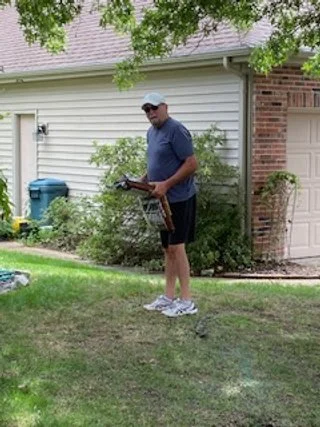
I’ve never been sick a day in my life. While not exactly true, it’s close. I don’t get the flu, maybe one cold a year, and have never missed a day at work. The only time I spent the night in a hospital (prior to the stroke) was fifty years ago for a minor surgery. Then on June 23, 2021, I went out to my car to take something back to the store and it felt as though someone threw a switch and changed my life forever. I soon found myself in an ambulance (my first ambulance ride, in fact) headed for the hospital. I was sure that I would end up being embarrassed for creating such an unnecessary commotion. I thought all I had was a case of vertigo. Fortunately, I was not the one responsible for my diagnosis.
Dear Caregiver or Care Partner,
I’ve never been sick a day in my life. While not exactly true, it’s close. I don’t get the flu, maybe one cold a year, and have never missed a day at work. The only time I spent the night in a hospital (prior to the stroke) was fifty years ago for a minor surgery. Then on June 23, 2021, I went out to my car to take something back to the store and it felt as though someone threw a switch and changed my life forever. I soon found myself in an ambulance (my first ambulance ride, in fact) headed for the hospital. I was sure that I would end up being embarrassed for creating such an unnecessary commotion. I thought all I had was a case of vertigo. Fortunately, I was not the one responsible for my diagnosis.
Suddenly, I’m in a small room with ten other people working on me and I don’t want to interrupt them because what they’re doing seems kind of important. Mentally, I’m doing fine. I know what’s going on. But every time they ask me if I know why I’m there, I respond, “I’m supposedly having a stroke.” Eventually I dropped the “supposedly.” I had gone from someone who took care of things to someone who needed to be cared for. To this day, I still find it hard to ask for help from friends and family.
From my perspective, a stroke is a funny thing. It’s like someone throwing a light switch. You don’t think about it and you don’t plan for it. It’s something you never think about until it happens, and then it’s all you think about. I didn’t feel any pain, never lost consciousness, and never realized just how serious things were getting. It was only when I started vomiting (which I never do) and everyone became much more intense that I realized how bad this could be. I later learned just how close I came to dying and how much Lana was managing.
The second I had my stroke, it instantly changed me into someone I didn’t recognize. I had spent my entire life working to provide a future for my family, making plans, traveling, and interacting with the world around me. There was always something that defined me and gave me a sense of person and pride. Be that physical, mental, or spiritual, there was always that one thing that gave me individuality, my mind. But all that changed with the stroke. I hate to use cliches’, but a “New Normal” arrived and I had to get used to it.
Life had presented me with circumstances that required me to be totally self-centered. Things were happening to me and regardless of whether I was prepared or not, I was forced to deal with them. Only later did I look back and realize what I put my spouse, family, and friends through and there will be guilt. Leaving Lana alone to handle everything made me feel guilty; guilty about relying on friends to do simple things for me, even though they’re doing exactly what I would do if the circumstances were reversed. I felt guilty about interrupting my children’s lives. I felt guilty about being angry with God.
Eventually, though, I came to realize that I did not cause this. It is merely the situation it has forced me to endure. It’s no one’s fault. So, I love my spouse and appreciate her for all that they have done and will do for me on this journey. I’ve embraced my family and friends and tried to thank them for all they’ve done. And I thank God for having given me another chance at life.
A few tips:
Be patient with us.
Be Kind
Be supportive.
Be positive.
Please keep us safe.
Laugh with us and keep loving us.
I can remember twenty years ago, but not last year. I guess as my brain is healing, it must prioritize data. All my life, I have had wonderful memories. Sometimes, to my detriment, I would remember things from as far back as grade school. I cannot fully express the frustration of not being able to trust something you have always relied on. So, when I vent my anger and frustration, know that it is not you I’m angry with and that I am sorry.
To read the full chapter written by Rick - order your copy of Stroke and the Spouse.
Stroke and the Spouse Mission
To impact, guide and improve the lives of Care Partners and Caregivers through education, support and resources

Stages of Caregiving: What to expect. (Copy)
The caregiver is the sole survivor of the stroke and needs to take on both roles in the relationship. Most are familiar with the stages of grief identified by Kubler-Ross, denial, anger, bargaining, depression, and acceptance. The grief felt is the loss of your planned future and your loved ones’ abilities. Each phase is challenging, but part of the road to recovery.
The stages I experienced as caregiver were confusion, fear/anger, loneliness, depression, and realization. During the initial weeks in the hospital, I felt confusion and fear based on that day’s challenges or triumphs. In time, I realized that the goal is to identify where you are and to embrace that stage.
The caregiver is the sole survivor of the stroke and needs to take on both roles in the relationship. Most are familiar with the stages of grief identified by Kubler-Ross, denial, anger, bargaining, depression, and acceptance. The grief felt is the loss of your planned future and your loved ones’ abilities. Each phase is challenging, but part of the road to recovery.
The stages I experienced as caregiver were confusion, fear/anger, loneliness, depression, and realization. During the initial weeks in the hospital, I felt confusion and fear based on that day’s challenges or triumphs. In time, I realized that the goal is to identify where you are and to embrace that stage.
What are the stages of the caregivers journey?
Confusion:
Confusion is the initial phase for the caregiver. I was confused and unclear of the extent of the stroke and what the potential outcome could be. Each day is a rollercoaster of emotions, anger, fear, exhaustion. I was overwhelmed but wanting answers. Most of the answers were of the “wait and see” variety from the health professionals and the “God only gives you what you can handle” or “I know someone who had a terrible stroke and is better than before” variety from well-meaning friends and family. But often, all you hear is “Blah, Blah, Blah.”
As a nurse, I really didn’t expect to be confused. I knew the aspects of the medical issues related to a stroke, but not the response I would have as a spouse. My mind raced with all my nursing knowledge, nursing friends shared advice and the dreaded internet of information. As a take-charge type, I became frustrated because all I could do was sit back and watch our life fall apart.
Fear and Anger
Fear and anger was the stage when I understood what had happened, but I now begin to worry and think “How can I handle this?” During this phase, the caregiver handles every aspect of their loved one’s life, making all the decisions alone. All the “what ifs” will rear their ugly heads. What if he dies? What if he survives? And how can I ever live without this person?
Once I passed through the confusion phase and had some idea what I was dealing with, my nursing background and the world of “what ifs’” entered the picture. I still didn’t know where we would be in a year poststroke, but I knew enough that it would not be a straightforward journey for either of us.nd what could be improved upon.
Loneliness and Depression
I had always thought of loneliness as a sadness due to lack of friends or company. So, how could I experience loneliness when surrounded by family, friends, and healthcare providers for many weeks and now home with Rick daily. I learned being lonely, while never alone, is a unique type of loneliness. The entire world is flying past you with the typical day-to-day issues you thought were so important until life priorities changed. No longer did I care if he remembered a task that I had asked him to do a million times, or that he was not as attentive as other spouses seemed to be. He was my world, and I was losing him.
When asked how I was doing, I was at a loss for words. I felt I had no right to complain or feel sorry for myself. He had the stroke, and I was healthy. The answer would always be: “I’m good, just a little tired. I just need to count my blessings.” With this response, I thought that I was protecting myself from dealing with my feelings, but I was pushing others away and closing doors of support. Everyone deals with this stage differently, but I think the loneliness while never alone is universal when a caregiver.
Realization
More and more days were hopeful for me and less were filled with depression and loneliness, this is when I finally came to terms with the life we will now have. The stroke was devastating for both of us and after a year, Rick’s recovery had plateaued. Over a period of about three months, we both became aware that his physical and cognitive limitations were not improving and that we were beginning to adapt our lives around those. The realization of what our future would hold happened for me at the one year follow-up medical appointment.
When the doctor shared, “He is progressing slowly, but he is moving in the right direction. I can see so much improvement from last year.” The confirmation from a medical professional that we were no longer taking steps backward provided comfort to us. We understood that improvements could happen beyond this point, but the likelihood that they would was low. The effects of the stroke and the changes in his overall health still needed to be addressed, but I no longer felt hopeless. I started to believe that we could work through any upcoming challenges.
For more information on the caregiver stages and tips for how to handle. Please purchase “Stroke and the Spouse” as well as provide your email and receive the weekly newsletter.
Stroke and the Spouse Mission
To lovingly guide and improve the lives of Care Partners and Caregivers through education, support and resources
Care Partner Dilemma - The medical answer to most questions - wait and see!
Care Partners and Caregivers, for months, I would ask every heath professional that cared for Rick, “What can I expect?” “What will he recover?” “Will he be the same as before the stroke” The answer 100% of the time was…
“You just have to wait and see what returns. The brain is a funny organ, everyone responds differently.”
Care Partners and Caregivers, for months, I would ask every heath professional that cared for Rick, “What can I expect?” “What will he recover?” “Will he be the same as before the stroke” The answer 100% of the time was…
“You just have to wait and see what returns. The brain is a funny organ, everyone responds differently.”
This was very difficult to hear. What I wanted was “ He will be ready for discharge in a day - good as new” Unrealistic but what I wanted. The brain recovers much differently then say a broken bone. Although there are general recovery expectations based on location and severity, it ultimately is different for every stroke survivor. So how do you survive reading those dreaded words - WAIT AND SEE ?
Educate yourself on what is the normal expectation and then discuss with your health care provider how this relates to your loved one. I found an excellent article “Stroke Recovery Timeline” by Preeti Raghavan, M.D. from John Hopkins University.
She wrote…
A stroke is an emergency situation, and the faster you receive treatment the better. But what happens in the days, weeks and months after a stroke? Johns Hopkins stroke rehabilitation specialist Preeti Raghavan, M.D., explains that “at times, the process can be slow and uncertain, and different people recover in a range of ways.”
Although recovery looks different for everyone, it can be helpful to get a sense of the stroke recovery timeline so you know what to expect after you or a loved one experiences a stroke.
To read the full article:
https://www.hopkinsmedicine.org/health/conditions-and-diseases/stroke/stroke-recovery-timeline
You are not alone - together we can find the answers you need. Please check out my services pages, I think you will find additional support one on one.
Stroke and the Spouse Mission
To lovingly guide and improve the lives of Care Partners and Caregivers through education, support and resources