
Blog
Scroll down to view all posts, or view our archive to view blog post titles over time.
What are the options for respite care or temporary relief from caregiving duties?
As a Care Partner/caregiver there will be times when you need a break from your loved one? For some a day away is sufficient but for others a week away is needed. This is when the Care Partner needs to determine options available for respite care.
Respite care provides the caregiver a chance to relax, regroup and replenish their energy. Respite can take various forms. It can mean a few short hours without caregiving responsibilities and worries, while a sibling steps in or an in-home caregiver takes over. Respite could involve dropping a parent or spouse off for adult day services. Respite might mean a long weekend away for caregivers during their loved one’s temporary stay at an assisted living facility.
What you need to know.
Respite care can be costly, so it is important to determine what services are needed and the most cost effective and safe way to provide those.
The types of Respite Care available.
The four most common are adult day care centers, in-home caregiving, assisted living stay and informal family respite care. Each has pluses and minuses and different costs associated with the care.
As a Care Partner/caregiver there will be times when you need a break from your loved one? For some a day away is sufficient but for others a week away is needed. This is when the Care Partner needs to determine options available for respite care.
Respite care provides the caregiver a chance to relax, regroup and replenish their energy. Respite can take various forms. It can mean a few short hours without caregiving responsibilities and worries, while a sibling steps in or an in-home caregiver takes over. Respite could involve dropping a parent or spouse off for adult day services. Respite might mean a long weekend away for caregivers during their loved one’s temporary stay at an assisted living facility.
What you need to know.
Respite care can be costly, so it is important to determine what services are needed and the most cost effective and safe way to provide those.
The types of Respite Care available.
The four most common are adult day care centers, in-home caregiving, assisted living stay and informal family respite care. Each has pluses and minuses and different costs associated with the care.
The ideal is the informal family/friend respite.
Siblings or other relatives, friends, and other volunteers through community networks like CaringBridge, church or school and let people pitch in to give the primary caregiver a break.
This allows the loved one to be at home with someone they know while you are away. This also decreases your stress level when you are away knowing that a family/friend is a caregiver.
Although there is no cost involved it can be a challenge to schedule and have individuals commit for an extended period. This works best for a weekend or one day a week.
The next option is In-Home Caregiving.
Professional caregivers such as certified nursing assistants, or when needed, a visiting nurse to provide care where the older adult lives. In-home services can encompass help with preparing meals, personal hygiene, toileting, and other needs, depending on the individual. This respite could encompass a few hours during the day or overnight stays.
In-Home provides additional services and care. With the family caregiver their medical knowledge may be limited and be more of staying with the individual and providing meals. This is ideal if your loved one needs more care.
Many companies provide in-home caregiving at various cost. The best approach is to search “in home assistance near me” This will provide services and cost. It is also important to ask for referrals from your primary care doctor, rehab center, friends in the medical field and those in your support group.
Many retired nurses and student nurses have taken on this role as an additional source of income. Check with the local nursing programs and interview students.
Consumer Affairs reports that the average cost is $24 per hour. This varies depending on the services needed and your location/state.
Options outside the home – Adult Day Care
These programs offer assistance and supervision for adults during the day. Adult social day care offers respite care, meals, recreation and social activities and may include some health services. Adult day health care provides respite care and more-intensive therapeutic, health and social services for older adults with serious medical conditions who otherwise might need nursing home care.
This is a great daily alternative for those with limited family support or work. The best way to locate is to search “Adult Day Care near me.”
Forbes reports that the average cost is $25 to more than $100 a day. per hour. This varies depending on the services needed and your location/state.
The cost of adult day care isn’t usually covered by Medicare. Depending on your loved one’s health and financial situation, you may qualify for government programs that reimburse adult day care costs. Reimbursement programs that might pay for adult day care may include some state Medicaid programs and the Adult Day Health Care program offered by the U.S. Department of Veterans Affairs.
Options for longer respite care – Assisted Living Stay
Short-term stays in some assisted living facilities, for instance to go on vacation or attend an out-of-town event. Medication assistance, meals, help with activities of daily living and a variety of social activities are all included.
Respite care can be costly and not facilities will care for certain conditions. Respite care is by far the most popular resource for caregivers associated with the National Family Caregiver Support Program, established by Congress in 2000 as part of the Older Americans Act.
The NFCSP provides funding though grants to private and voluntary agencies that assist family caregivers with services including respite. NFCSP funding is also provided to every state, territory, and tribe, requiring the establishment of a basic set of services and supports to family caregivers.
The average rate for one day of assisted living facility care is $148, according to the Genworth survey. However, respite care might not be offered on an occasional, short-term basis, and there may be a minimum stay requirement.
NEXT STEPS:
1. Start looking NOW not when you are your ropes end. Knowing you have a plan will decrease your stress.
2. Determine what services you need and how often.
3. Discuss these needs with family and friends.
4. Reach out to your primary care doctor, friends, and medical personnel for recommendations.
5. Determine your budget.
6. Interview several locations.
7. Develop a plan with the support chosen.
8. Schedule time away
For more information on what worked for us, check out “Stroke and the Spouse” available on Amazon or follow the code below to purchase.
Stroke Caregiver Connection…Because you care! as mental health providers but there is a difference.

Stroke Caregiver Connection…Because you care!
How can I balance caregiving responsibilities with my own personal and professional life?
From that moment that you called 911, the world as you knew it no longer existed. Your role changed from partner, family member, child, or friend to caregiver. Soon, you realized that while taking care of your loved one you had neglected your own physical, emotional, and spiritual health. Being a caregiver is exhausting, and unless you are caring for yourself, caring for another is extremely difficult.
The caregiver is the neglected/forgotten stepchild in our society when a loved one suffers a health crisis, and he/she needs information, support, and resources to heal from the event so that a fulfilling, joyful new normal can be established.
How can you balance it all? The care of the loved one, your life both personally and professionally and not feel stressed, angry, or overwhelmed in this new role?
Upon reviewing literature and information provided on the internet, AARP had provided some very good information. Did you know?
The 2020 Caregiving in the US report from the National Alliance for Caregiving (NAC) and AARP found family caregiving rose from 18% to 21% from 2015 to 2020. Additionally, the average family caregiver provides about 23 hours of care per week.
Caregiving can seriously disrupt multiple areas of your life. And the impact can be particularly detrimental to employment if you are among the 60% of family caregivers working full-time. For example, AARP found:
• 53% of caregivers were late for work, left early, or took time off to provide care.
• 15% reduced their work hours.
• 14% took a leave of absence.
• 8% received reprimands for performance or attendance.
• 4% lost their workplace benefits.
From that moment that you called 911, the world as you knew it no longer existed. Your role changed from partner, family member, child, or friend to caregiver. Soon, you realized that while taking care of your loved one you had neglected your own physical, emotional, and spiritual health. Being a caregiver is exhausting, and unless you are caring for yourself, caring for another is extremely difficult.
The caregiver is the neglected/forgotten stepchild in our society when a loved one suffers a health crisis, and he/she needs information, support, and resources to heal from the event so that a fulfilling, joyful new normal can be established.
How can you balance it all? The care of the loved one, your life both personally and professionally and not feel stressed, angry, or overwhelmed in this new role?
Upon reviewing literature and information provided on the internet, AARP had provided some very good information.
Did you know?
The 2020 Caregiving in the US report from the National Alliance for Caregiving (NAC) and AARP found family caregiving rose from 18% to 21% from 2015 to 2020. Additionally, the average family caregiver provides about 23 hours of care per week.
Caregiving can seriously disrupt multiple areas of your life. And the impact can be particularly detrimental to employment if you are among the 60% of family caregivers working full-time. For example, AARP found:
· 53% of caregivers were late for work, left early, or took time off to provide care.
· 15% reduced their work hours.
· 14% took a leave of absence.
· 8% received reprimands for performance or attendance.
· 4% lost their workplace benefits.
Furthermore, caregivers often change their employment situation when balancing work and caregiving becomes too much. Unfortunately, this change often contributes to caregiver stress by exasperating financial burdens.
How can you balance Work and Caregiving?
Talk with your Human Resource Department and manager. Share your situation and your desire to be a productive employee. · Discuss possibilities to minimize work disruptions and develop a contingency plan in case of emergencies. Some options that could be available include job-sharing, leave of absence, remote work, or change in work hours. The key is to be open and share your situation, your employee is more likely to be able to help if they are aware of your needs early on.
Review your benefit package and get acquainted with your employer’s leave policies to learn if you can use personal, sick, or vacation days for caregiving. In addition, some companies have a program for donated leave where coworkers give you their unused time.
Research Employee Assistance Programs (EAP). This was extremely helpful for me. I was unaware of all the services provided free or at a minimal cost. As a spouse you can also be able to utilize your loved one’s employer for support. Typically, EAP provides; benefits, counseling, information, referrals, eldercare assessments, legal help, financial counseling and insurance support.
Some employers reimburse alternative caregiving services like adult day care if you have to work. In addition, more businesses are adopting employee programs like on-site support groups, concierge services, discounts, and health and wellness plans to help lower stress and make balancing work and caregiving somewhat easier.
Check to see if you are eligible for the Family and Medical Act Leave (FMLA). While I was attempting to determine my next steps, having this time away helped. I knew that my job was secure as I navigated this new role. The Family and Medical Leave Act (FMLA) provides qualified individuals working in public organizations, public and private schools, and companies with over 50 employees up to 12 weeks of unpaid leave annually and job protection. Caregivers serving in the military are allowed up to 26 weeks. In addition to the federal FMLA program, your state may have specific family and medical leave policies. This extra time can help you create a plan to make balancing work and caregiving easier.
Inquire about Paid Family Leave. I live in Missouri and did not qualify but if you live in one of these states, you could receive some level of paid or unpaid family leave in addition to that provided by the FMLA: California, New Jersey, New York, Rhode Island, Massachusetts, Connecticut, Oregon, New Hampshire and Washington, DC.
Sometimes, balancing work and caregiver is just a matter of rearranging your work schedule. And since the COVID-19 pandemic, some companies have implemented more flexible scheduling options. For instance, flexible hours would let your workday begin later so you can assist your loved one earlier in the day. Alternatively, another option could be a compressed schedule where you work four long shifts and get the fifth day off for caregiving. If you don’t have a set schedule, ask your employer to develop one with you so you can make arrangements more efficiently. For example, some caregivers elect to share jobs with a coworker or switch to part-time. Or, if your employer provides phased-in retirement, you could gradually reduce your hours.
As a caregiver, your free time is sparse; if you have a long job commute, your time is even more limited. Therefore, less time commuting to where you spend most of your days could be a practical idea for balancing work and caregiving. Consider a short-term rental close to your patient’s home if your situation allows. Alternatively, you could use the time during a long commute to try a productive activity that stimulates your mind and lowers stress, such as: Practicing mindfulness, listening to audiobooks, learning a language, or listening to a podcast. Lastly, if your employer operates across several locations, moving to one nearer to you or your loved ones’ home can shorten your commute, saving time and making balancing work and caregiving easier.
Don't Stretch Yourself Thin. Most caregivers are empaths who genuinely love helping others. But for many — including yourself — “no” may not be in your vocabulary. But as a caregiver, being honest with your schedule is an essential part of balancing work and caregiving. To that end, recognize how many hours you can work, and don’t be afraid to say no if someone requests more than that from you.
What worked for me…
Like you, I was spinning many plates of responsibility and soon they were starting to fall. Each morning, I would start the day fresh and ready to take on whatever came my way. By noon, I would be wanting to throw in the towel. The above information that I shared helped immensely but I also want to share what helped me personally.
I had to make a real and honest assessment of what was working and what was not. I also had to determine what was a temporary issue and what was long term. For us, the physical care was shorter (under a year) and I was able to utilize work resources to be able to handle. The long-term issues were more difficult.
I had to “let go” of being the perfect caregiver and be open to uncertainty of the role and the realization that no matter how well you plan, life doesn’t always cooperate.
I had to find outlets for me. I engaged in my spiritual community, joined a book club, and committed to improving my social outings. I didn’t need more outings but better-quality outings.
I shared my struggles with a trusted work friend and felt comfortable asking her help at work.
Finally, I made the decision to retire. This was extremely difficult as I was not ready for retirement, but I weighed the quality of life for my husband and I going further. If you can financially, I learned that this time together is time I would never get back. Surprisingly, the company I worked for continued without me, different but we are all replaceable at work but not always at home.
For more information on what worked for us, check out “Stroke and the Spouse” available on Amazon or follow the code below to purchase.
Stroke Caregiver Connection…Because you care! as mental health providers but there is a difference.

Stroke Caregiver Connection…Because you care!
How do you choose a counselor that understands the caregivers’ needs?
Life has changed and it is overwhelming. What you previously knew or planned for your life has turned upside down. Friends and family are a great support but like you they are at a loss for what to say and how to best help you navigate this new role. As humans, we need to be able to balance our physical, spiritual, and mental health to not only cope with life but to have joy. No matter what phase your loved one’s care is at, it is never too late or early to search for help from a counselor.
As a care partner, I waited until I was very overwhelmed before I found support from a counselor. Please don’t follow my lead, reach out now. The counselor can provide a safe place to vent. They do not know your loved one and can have an unbiased voice regarding your feelings. Let me share the benefits of therapy that I received.
Able to share my thoughts and feelings without guilt that I was angry at my situation.
Received tools to be able to better handle my situation.
Understand that what I was experiencing was not unusual and that I was “normal” in how I was feeling.
Someone to just listen and not state how it could have been much worse or tell me that someone they knew had it much worse.
Life has changed and it is overwhelming. What you previously knew or planned for your life has turned upside down. Friends and family are a great support but like you they are at a loss for what to say and how to best help you navigate this new role. As humans, we need to be able to balance our physical, spiritual, and mental health to not only cope with life but to have joy. No matter what phase your loved one’s care is at, it is never too late or early to search for help from a counselor.
As a care partner, I waited until I was very overwhelmed before I found support from a counselor. Please don’t follow my lead, reach out now. The counselor can provide a safe place to vent. They do not know your loved one and can have an unbiased voice regarding your feelings. Let me share the benefits of therapy that I received.
Able to share my thoughts and feelings without guilt that I was angry at my situation.
Received tools to be able to better handle my situation.
Understand that what I was experiencing was not unusual and that I was “normal” in how I was feeling.
Someone to just listen and not state how it could have been much worse or tell me that someone they knew had it much worse.
Felt more in control of my destiny utilizing the tools given.
Better understanding of what my loved one was experiencing as well as more patience.
Helped me to make the transition from a caregiver mentality to a Care Partner focus.
How can you choose the correct counselor for you?
Finding someone that you click with and has experience around your concern is critical. The personal relationship between you and the therapist will determine the success of your therapy. The terms “counselor” and “therapist” are used casually as mental health providers but there is a difference.
The American Counseling Association notes that counselling is often goals-focused. You may come to counselling to work on goals for your mental health, overall wellness, or career or education milestones.
Treatment areas include:
individual, couples, family, and group therapy
trauma
marital or relationship issues
alcohol or substance use
struggles with anger or low self-esteem.
loss or grief
multiple issues, such as PTSD with substance use.
Typically, a counselor focuses on present day problems that may be affecting your overall mental health and well-being. They can assess your mental health and help you work on reducing symptoms and feeling better. Like counselors, therapists focus on treatments that can benefit your overall mental health and well-being. Therapy sessions can happen:
one-on-one (individual therapy)
with your partner or family
in a group setting
The kinds of conditions treated by therapists are often the same as those treated by counselors. According to the National Institute of Mental Health Trusted Source, conditions treated with therapy include:
stress
grief or loss
relationship or family issues
depression
anxiety
bipolar disorder
PTSD
other mental health conditions
Both therapists and counselors may be trained in specialized forms of talk therapy. This involves verbalizing your problems to help work through solutions that may also involve changes to your thinking and behaviors. Cognitive behavioral therapy (CBT) is one option.
The goal of therapy is to relieve your symptoms and help you improve your quality of life. But it’s important to ask a therapist what kinds of techniques and approaches they will use to help. This can help you find the right strategy for your needs.
How do you choose a counselor or therapist?
What are you wanting to accomplish? What are your goals?
For example, my goal was to be better able to handle my situation in a positive way as well as find joy in this new reality.
What can you afford?
The average cost of psychotherapy in the U.S. ranges from $100 to $200 per session (depending on the state), according to a 2019 report by Simple Practice, a practice management system for mental health professionals[1]. When seeing a therapist in person, you’re likely to be billed per session. There are instances, however, when you would be billed a monthly fee, such as for subscription-based services received through an app or online therapy platform. Your average monthly cost depends on your per-session rate and session frequency.
If you have health insurance, you likely have a copay for therapist visits. If your therapist is considered “out of network,” you may have to pay out of pocket, meaning you must pay the entire fee. Some therapists also allow their patients to pay on a sliding scale, with or without insurance.
If you find a therapist who has a sliding scale payment plan, they will often use your income information to determine the cost of your sessions. Ultimately, your hourly fee may still vary from one therapist to another, but the cost is calculated with your financial means and need in mind.
Ask for referrals?
Talking to others, especially in a support group, can open a conversation on what worked for them and who they felt comfortable with. I spoke to several friends that I knew had utilized services either in the past or currently for suggestions.
Your physician is all a great source to help direct you to the proper therapist/counselor.
Do you want to do your therapy online or in person?
There has been an explosion of online services and applications now available that are inexpensive and can be accomplished in your home. It is dependent on your comfort level, access to care and what you prefer.
For example, I preferred a live in person meeting. I wanted to be away from home and a place that was just for me.
Some of the most used online search tools include:
Here are a few examples of organizations that offer search tools to help you find a specialized therapist near you:
American Stroke Association
AARP
On you first visit…
The American Psychological Association suggests a few questions to consider asking your therapist during your first session:
Are you a licensed psychologist in this state?
How many years have you been in practice?
How much experience do you have working with people who are dealing with [the issue you’d like to resolve]?
What do you consider to be your specialty or area of expertise?
What kinds of treatments have you found effective in resolving [the issue you’d like to resolve]?
Red Flags to look out for…
Does the room make you feel physically uncomfortable? Does it feel private and secure?
Are you experiencing overwhelming feelings of anxiety or panic? Some anxiety or nervousness is understandable, but you’ll want to communicate to your therapist if you’re experiencing symptoms of an anxiety or panic attack.
Do you feel comfortable telling your therapist anything? Are they making you feel judged or uneasy in any way?
Is your therapist completely present with you throughout your session?
Does the therapist interrupt you, or do they listen carefully to what you’re saying?
Does the therapist respect your time by being prompt to appointments?
Does the therapist brush off or invalidate your concerns?
Do you feel seen, heard, and respected during your session?
Resources:
Affordable Mental Health Services | Walter's Walk Counseling | United States (walterswalk.com)
Psychology Today https://www.psychologytoday.com/us/therapists/grief/missouri
betterhelp.com https://www.betterhelp.com
Contact your insurance company for in network providers
Find Healthcare Providers: Compare Care Near You | Medicare
Find Medicare-approved providers near you & compare care quality for nursing homes, doctors, hospitals, hospice centers, more. Official Medicare site.
Medicare info pulled from the site Medicare.gov Outpatient Mental Health Coverage (medicare.gov)
Medicare Part B (Medical Insurance) helps pay for these outpatient mental health services:
One depression screening per year. You must get the screening in a primary care doctor’s office or primary care clinic that can provide follow-up treatment and referrals.
Individual and group psychotherapy with doctors (or with certain other licensed professionals, as the state where you get the services allows).
Family counseling, if the main purpose is to help with your treatment.
Testing to find out if you’re getting the services you need and if your current treatment is helping you.
Psychiatric evaluation.
Medication management.
Certain prescription drugs that aren’t usually “self administered” (drugs you would normally take on your own), like some injections.
Diagnostic tests.
Intensive outpatient program services (starting January 1, 2024).
A one-time “Welcome to Medicare” preventive visit. This visit includes a review of your possible risk factors for depression.
A yearly “Wellness” visit. Talk to your doctor or other health care provider about changes in your mental health since your last visit.
Part B also covers outpatient mental health services as part of substance use disorder treatment.
Your costs in Original Medicare
You pay nothing for your yearly depression screening if your doctor or health care provider accepts assignment.
After you meet the Part B deductible, you pay 20% of the Medicare-approved amount. for visits to your doctor or other health care provider to diagnose or treat your condition.
If you get your services in a hospital outpatient clinic or hospital outpatient department, you may have to pay an additional copayment or coinsurance amount to the hospital.
For more information on what worked for us, check out “Stroke and the Spouse” available on Amazon or open the order book tab!

Stroke Caregiver Connection…Because you care!
What are some strategies for preventing caregiver burnout?
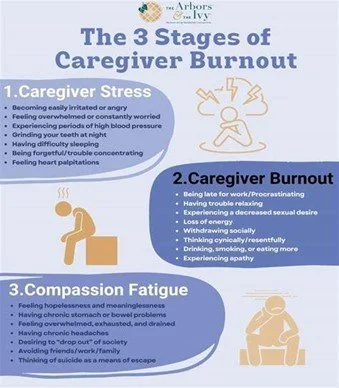
Feeling anxious, overwhelmed, exhausted, cranky, and finding yourself withdrawing from friends? You could be experiencing Caregiver Burnout. What exactly is “Caregiver Burnout” and how can you deal with or prevent it?
Caregiver burnout is a state of physical, emotional, and mental exhaustion. Burnout can happen at any time but typically it is caused by not getting additional help you and the loved one need, or if you are trying to do something more than able – physically or financially. Many caregivers feel guilty if they spend time on rather than on their ill or elderly loved ones.
I love this easy chart of the 3 stages of Caregiver Burnout. Quick and easy with excellent information.
Feeling anxious, overwhelmed, exhausted, cranky, and finding yourself withdrawing from friends? You could be experiencing Caregiver Burnout. What exactly is “Caregiver Burnout” and how can you deal with or prevent it?
Caregiver burnout is a state of physical, emotional, and mental exhaustion. Burnout can happen at any time but typically it is caused by not getting additional help you and the loved one need, or if you are trying to do something more than able – physically or financially. Many caregivers feel guilty if they spend time on rather than on their ill or elderly loved ones.
I love this easy chart of the 3 stages of Caregiver Burnout. Quick and easy with excellent information.
How can you prevent Caregiver Burnout?
WebMD provides wonderful information on their website related to prevention. To learn more:
What Is Caregiver Burnout? - WebMD
Know your limits and do a reality check of your personal situation. Recognize and accept your potential for caregiver burnout.
Find someone you trust -- such as a friend, co-worker, or neighbor -- to talk to about how you feel.
Set realistic goals. Accept that you may need help and turn to others to handle some tasks.
Be realistic about the disease your loved one has, especially if it’s a progressive disease such as Parkinson's or Alzheimer's.
Set aside time for yourself, even if it's just an hour or two. Taking care of yourself isn’t a luxury; it’s a necessity if you're going to be an effective caregiver.
Talk to a professional, such as a therapist, social worker, or clergy member.
Find caregiver support groups or workshops that can help you find ways to manage stress.
Educate yourself. The more you know about the illness, the more effective you’ll be as a caregiver.
Stay healthy by eating right and getting plenty of exercise and sleep.
If you want to help prevent burnout, consider turning to the following resources:
Home health services -- These agencies provide home health aides and nurses for short-term care if your loved one is acutely ill. Some agencies provide short-term respite care.
Adult day care -- These programs offer a place for seniors to socialize, take part in activities, and get needed medical care and other services.
Nursing homes or assisted living facilities -- These institutions sometimes offer short-term respite stays to provide caregivers a break.
Private care aides -- These professionals can help figure out your needs and coordinate care and services.
Caregiver support services -- These include support groups and other programs that can help caregivers recharge their batteries. You can also meet others with similar issues, get information, and find more resources.
Area agency or commission on aging -- Contact your local organization or your local chapter of the AARP for services available in your area.
National organizations -- Search online for local chapters of national organizations (such as Family Caregiver Alliance) that help people with illnesses such as Parkinson's disease or stroke. These groups can provide resources and information.
What helps me…
I make a weekly list of what needs to be done that week. Then I cross off all the non-essentials and highlight what others can do. I have finally learned that not everything needs to be done NOW or BY ME!
Walk away from the situation. It may only be around the block or in the neighborhood. It is your time to rest your mind.
When they rest – you rest.
Join a support group and make a new friend that “gets” what you are going through.
Your plate is full – I am learning to say NO to additional tasks, but I always leave room for dessert “Those things I want to do for me.”
Realizing that it is ok to be angry at the situation but not at the person. They are also frustrated.
This is a marathon, and you need to celebrate the small victories.
Let go of the past. The “would of and should Of’s” will drag you down. Look forward.
Journal your feelings but always close the day with 3 items of gratitude. It may seem hard at first. Somedays just journaling “everyone is still alive and I didn’t kill them- LOL” is all you can write.
For more information on what worked for us, check out “Stroke and the Spouse” available on Amazon or follow the code below to purchase.

Stroke Caregiver Connection…Because you care!
How can I effectively manage my loved one's medications?
Looking at 10 different bottles of medication with crazy sounding names, different dosages, and different times to be given is overwhelming and frankly, can cause anyone stress. How can you manage the medications that your loved one now needs? Be sure that they are taken safely? And know when to call if there is an issue? These are all very normal questions, and you are not alone in your concerns. This week, I will provide some easy medication management tips.
Looking at 10 different bottles of medication with crazy sounding names, different dosages, and different times to be given is overwhelming and frankly, can cause anyone stress. How can you manage the medications that your loved one now needs? Be sure that they are taken safely? And know when to call if there is an issue? These are all very normal questions, and you are not alone in your concerns. This week, I will provide some easy medication management tips.
The tool that I have found most helpful is the below table/form. You can print out a copy from the download page.
ADD BUTTON
The key information needed to be successful is as follows:
Name of Medication – Ask for both the generic and the common name. The common name is usually easier to pronounce.
Date started and what MD ordered –
What the medicine is for – ask them to describe in laymen terms. Such as for high blood pressure or to prevent clots.
What is the dose and how often to take –
What are some concerns I should watch for –
For example, if someone is on blood pressure medicine, you need to check for daily BP. Ask the MD what range they should be at and when to call the office.
Any nutritional concerns, can they eat or not eat certain foods on this medication.
If blood thinner, what precautions need to be taken.
Does this medication need to be evaluated utilizing blood work such as bleeding studies.
Your pharmacist can be an excellent source for providing education as well as the nurse at the doctor’s office. Never be afraid to ask.
For more information on what worked for us, check out “Stroke and the Spouse” available on Amazon or follow the code below to purchase.
Stroke Caregiver Connection…Because you care!
Questions every Family Caregiver Should Ask Themselves
Last week, you were living your life as usual and suddenly, a health crisis occurred for a loved one and you have been thrust into to a new role. The family caregiver. What does this mean? Are you ready to take this on? Am I capable? Why me? These are all valid and real questions that we have all had when faced with the role of caregiver.
As a caregiver advocate, I have learned through personal experience and the wisdom of others some tips on how to make the transition. But before you take on this role, I advise that you ask yourself some basic questions. As I share the top 5 questions to ask yourself and some tips, reflect on your answers and feel free to reach out in the comments below or contact me for additional support.
Last week, you were living your life as usual and suddenly, a health crisis occurred for a loved one and you have been thrust into to a new role. The family caregiver. What does this mean? Are you ready to take this on? Am I capable? Why me? These are all valid and real questions that we have all had when faced with the role of caregiver.
As a caregiver advocate, I have learned through personal experience and the wisdom of others some tips on how to make the transition. But before you take on this role, I advise that you ask yourself some basic questions. As I share the top 5 questions to ask yourself and some tips, reflect on your answers and feel free to reach out in the comments below or contact me for additional support.
Do you have any additional support, such as a supportive spouse or partner, a sibling, a family member, or a friend? Are they a positive or negative support?
Being a caregiver can be a 24/7 responsibility and should not be handled by only one person. Physically, emotionally, and spiritually, this role can become overwhelming if you attempt to do it all alone.
Have a meeting with all that have offered support. Share that although you are the primary caregiver, you will need help. This is the time to coordinate additional duties that they can assist with, doctor appointments, scheduled day out for caregiver, and a weekly social event for the stroke survivor.
Prior to discharge, the hospital’s Case Manager or Social Worker can provide local resources for support as well.
How do you plan to make time for yourself while caregiving?
Stress can manifest in many ways and how we handle stress varies. Some have healthy coping mechanisms such as exercise, meditation, or journaling, but others can be harmful such as overeating, abuse of alcohol or drugs, or isolation from others. It is critical to your well-being to acknowledge your stress and be open to positive stress management techniques.
A sign of feeling positive mentally is self-care. As caregivers, days and nights revolve around our loved one. Before you know it, your normal self-care routine is a thing of the past. I remember waking one morning and thinking, “When did I get so gray? Why is my hair such a mess? And my feet and toes are embarrassing.” These may seem minor, but when we look the best, we also feel our best. Taking care of you is not a selfish act and does not take away from your loved one’s care.
Part of what Rick lost was his ability to focus on others and me. It was emotionally painful that he was unable to identify or know what to do when I was struggling. This has been very difficult, and I would let myself go because I figured, “who cares?” But I learned I needed to care about and love myself.
Monthly Self- Care Checklist
Hair appointment for cut, color, or new style.
Manicure/Pedicure appointment.
Schedule lunch or dinner with a friend Plan a walk or exercise two to three times a week.
Plan an “out of the house” activity, i.e., museum, shopping, or a class of some kind.
Volunteer in your community. When helping others, the reward is that you are also helping you.
Laugh. If feeling down, call the person who always makes you happy and giggle.
Say “NO” to any requests that do not feed your spirit or promote self-care.
Reconnect with friends and family. Reach out every other day to one person.
Rest when you are tired–no excuses!
Where do you need to draw the line and say, “I can do this much and no more”?
Initially, you will try and do it all at the expense of your own well-being. We all have been in your shoes, and we are here to help. Assess what you can provide and what you want to do.
Make a list of what is needed, and the time involved. Take a day in the life of a caregiver and just write down a typical day for you. You will be amazed at all that is needed daily.
Next. Make a list of what you did just for you. A shower, eating, or a walk. Again, it is an eye-opening exercise.
Lastly, what can be delegated to another or is it a task that is needed daily or at all. I tended to over care for my spouse initially. Share this list with your support group and delegate!!!!
How do you plan to continue maintaining and improving your own physical and mental health?
Busy with the care of your loved one, it’s easy to forget that your health matters just as much now, if not more. Work with your healthcare provider to determine the best course of action to improve and then maintain your health.
Prevention and early detection of health issues will allow for the caregiver to make simple changes to lifestyle, start a new medication or have a procedure that can improve your quality of life.
Do you have children at home?
Depending on the ages of the children, this can either be helpful or not. Older children can be a great assistance, but they still need you as a parent. Assess where they are at, how they feel, and ask them their opinion on family caregiving.
I highly recommend that if you have children in the home, visit a family counselor prior to discharge and even during care giving to allow the family a safe place to discuss this new family dynamic.
Family caregiving can be a challenge but is also very rewarding and such an opportunity for growth for the caregiver and the stroke survivor. You will have moments of frustration but also tenderness, laughter, and love that you will never regret or forget.
For more information on what worked for us, check out “Stroke and the Spouse” available on Amazon or follow the code below to purchase.
Stroke Caregiver Connection…Because you care!
Feeling guilty when you get angry with the stroke survivor.
Why do we avoid being angry or expressing our frustration with our loved ones? GUILT
A common but very real issue is dealing with all the emotional and physical care of the stroke survivor. They have had a terrible health crisis and are trying to get back to where they once were. But it takes time or may not even happen, and we understand we need to be patient but “come on”, we get tired, angry and need to call them on their behavior.
Walking on eggshells, avoiding conflict, or holding all your feelings in is not healthy for either of you. Anger is a normal emotion and if not dealt with in a positive fashion can fester and lead to resentment, lashing out in a negative way and causing more divisiveness in a Care Partner/Stroke Survivor relationship.
Why do we avoid being angry or expressing our frustration with our loved ones? GUILT
A common but very real issue is dealing with all the emotional and physical care of the stroke survivor. They have had a terrible health crisis and are trying to get back to where they once were. But it takes time or may not even happen, and we understand we need to be patient but “come on”, we get tired, angry and need to call them on their behavior.
Walking on eggshells, avoiding conflict, or holding all your feelings in is not healthy for either of you. Anger is a normal emotion and if not dealt with in a positive fashion can fester and lead to resentment, lashing out in a negative way and causing more divisiveness in a Care Partner/Stroke Survivor relationship.
Why do we avoid being angry or expressing our frustration with our loved ones? GUILT
I know for a long time, I avoided any confrontation or having expectations because of the below reasons.
We are healthy and they have had a stroke, they are in a worse place. Only a “bad” person would get angry.
They can’t help what they are doing.
I am not angry at them but the situation and need to deal with this new normal.
We are told frequently we are so “strong” and feel that we must live up to this word.
I should be thankful they are alive and to lower my expectations.
But anger continues to eat away unless you do two things; develop positive anger management techniques and develop a plan with your loved one. These are the techniques I practice that seems to help me.
Walk away and assess the anger situation before acting. Ask the following:
What am I really upset about?
Is my LO capable of the action needed?
Am I overly tired and overreacting? (sleep solves a lot of anger issues)
Once I assessed and felt that it is an issue that my LO can impact – discuss.
Clearly state what you are angry about without yelling but rather talk calmly so that they can better understand and commu
Due to their stroke, they may not be able to problem solve or provide suggestions. Their response can be, “I am sorry, I will try to be better” not knowing what better is.
Share a choice of two possible actions that they can take to resolve the conflict. Make sure either choice will meet your needs.
If the conversation is not going well – take a time out, A few moments of quiet time might help you feel better prepared to handle what's ahead without getting irritated or angry.
Use humor to defuse anger. Lightening up can help diffuse tension. Use humor to help you face what's making you angry and, possibly, any unrealistic expectations you have for how things should go. Avoid sarcasm, though — it can hurt feelings and make things worse.
If your loved one does not participate or you feel that the issue is your anger at the situation caused by the stroke. Try the following.
Exercise daily. You don’t need to be a “gym rat” but just a walk around the block can make a big difference.
Journal your anger. When you write it down, you release that emotion and can close the page on that issue for the day.
Turn it over to God. He has big shoulders and can provide options if we allow and trust.
Talk to a counselor, family member or friend that will listen and not judge. You don’t need to hear you are wrong for feeling this way but rather a kind ear that can provide some positive solutions.
Let it GO!!! Once discussed or acted upon, Forgive yourself and your LO. If you allow anger and other negative feelings to crowd out positive feelings, you might find yourself swallowed up by your own bitterness or sense of injustice.
Stroke Caregiver Connection…Because you care!
When your loved one stops being social.
Over the past few weeks, we have travelled to see our daughter’s family in LA. Every minute was precious and filled with joy, but it can be very overwhelming for the stroke survivor and the Care Partner.
Due to their stroke limitations participation in activities and conversations are a challenge. What I experienced – My husband sat back and did not participate but observed. This was difficult because as the Care Partner, I was either making conversation for him or trying to explain his behavior. It is difficult to hear “He has really changed” “Why doesn’t he talk to us?” or watching Rick and the family not interacting as before. What I tell others “He loves you all and is content sitting back and watching” “Communication is hard for him.”
The feeling and realization that your loved one is slowly fading away from social situations is heart breaking. At home, one on one, He does well, although limited but he can engage. What causes this phenomenon and what can you do to improve. As we have traveled and had more social events, I have developed some strategies that I felt helped and want to share with you.
Over the past few weeks, we have visited our daughter’s family in LA. Every minute was precious and filled with joy, but it can be very overwhelming for the stroke survivor and the Care Partner.
Due to their stroke limitations, participation in activities and conversations is a challenge. What I experienced – My husband sat back and did not participate but observed.
This was difficult because, as the Care Partner, I was either conversing with him or trying to explain his behavior. It is difficult to hear, “He has changed,” “Why doesn’t he talk to us?” or watch Rick and the family not interacting as before. I tell others, “He loves you all and is content sitting back and watching.” “Communication is hard for him.”
The feeling and realization that your loved one is slowly fading away from social situations is heartbreaking. At home, one-on-one, He does well; although limited, he can engage.
What causes this phenomenon, and what can you do to improve? As we have traveled and had more social events, I have developed some strategies that I felt helped and want to share with you.
What causes your loved one to “fade into the wall” at social functions?
Factors that can cause speech and understanding issues with your loved one.
Fatigue from a lack of proper sleep or time zone changes when traveling. When tired, the slurring of words appears unbalanced or confused, and he gets frustrated more easily. Since they are often tired, it’s best if you don’t stay too long.
Outside of their normal routine, that is a comfort level at home.
Others are not providing adequate time to form their thought, find the words and respond.
Excessive stimulation in the social situation, numerous conversations happening, television or music, and
Aphasia and impaired motor skills are two of the main reasons for communication issues.
Aphasia is the inability to communicate related to the damage to the brain.
This condition can affect the ability to understand what is being said to them or asked of them. Aphasia may also impact the ability to read, write, and deal with numbers.
Impaired motor skills can be seen as slurred or garbled speech due to muscle weakness, motor programming, and speech-muscle coordination.
What helps my loved one…
Be patient. Remember, they are still aware and understand their limitations and can feel frustrated or embarrassed with the changes to communication.
Eliminate distractions. The SS brain must process input, but focus is a challenge when there are multiple distractions, and the multiple inputs can cause confusion.
Keep questions simple. Form your questions that require a yes or no. Do not ask questions that require multiple answers (1 question = one answer). If you need a decision (where to eat), do not ask open-ended questions but provide a choice of two responses that you are happy with.
Keep commands and directions easy. Only provide one step at a time. Memory might be impaired, reminded of dates or times.
Speak in a normal tone of voice and speak directly to them, not others in the room. Speak one person at a time. Use gestures, pictures, or other nonverbal cues to help with understanding.
Do not rush the SS to answer questions or comments. Allow time for the SS to process the information and form a response. My loved one shared that organizing thoughts and responding properly takes several minutes.
Resist the temptation to answer questions for them. This can be hard, but it is so important that you allow them time to gather their thoughts.
For more information on what worked for us, check out “Stroke and the Spouse” available on Amazon or follow the code below to purchase.
Stroke Caregiver Connection…Because you care!
Emotional Changes and Outburst
The emotional challenges began once home and remain an ongoing trial for us. Stroke affects the brain, and the brain controls our behavior and emotions. Rick experiences feelings of irritability, forgetfulness, carelessness, and confusion. Both of us experienced depression, anxiety, or anger. If you and your loved one are also feeling this way, discuss with your physician whether anti-depressant medication would be appropriate for your loved one and you.
Rick’s personality changed from being engaged in life to an attitude of apathy. He refers to it as being disengaged, that he is an observer in his own life. Apathy is a lack of interest, enthusiasm, or concern for life, feeling empty and not knowing why. His regular response to my questions about things became, “That sounds good. No big deal.”
A stroke is the “gift” that keeps on giving. When you think you’ve figured out how to handle something, the brain throws you another curve. My brain was overflowing with questions and emotions regarding Rick’s stroke that I was desperate to share with him, but he could not process. I had no idea if or when I could expect that he would again be my emotional partner.
The emotional challenges began once home and remain an ongoing trial for us. Stroke affects the brain, and the brain controls our behavior and emotions. Rick experiences feelings of irritability, forgetfulness, carelessness, and confusion. Both of us experienced depression, anxiety, or anger. If you and your loved one are also feeling this way, discuss with your physician whether anti-depressant medication would be appropriate for your loved one and you.
Rick’s personality changed from being engaged in life to an attitude of apathy. He refers to it as being disengaged, that he is an observer in his own life. Apathy is a lack of interest, enthusiasm, or concern for life, feeling empty and not knowing why. His regular response to my questions about things became, “That sounds good. No big deal.”
A stroke is the “gift” that keeps on giving. When you think you’ve figured out how to handle something, the brain throws you another curve. My brain was overflowing with questions and emotions regarding Rick’s stroke that I was desperate to share with him, but he could not process. I had no idea if or when I could expect that he would again be my emotional partner.
What emotional changes can be experienced?
Depending on what part of the brain that the stroke damaged, will make a difference on the emotional/personality changes experienced. The good news is that many changes caused by a stroke tend to improve over time. So, time is on your side.
Personality changes that may occur; Not feeling like doing anything, being irritable or aggressive, being disinhibited – saying or doing things that seem inappropriate to others, or being impulsive – acting without thinking, and doing things that are not safe or are not appropriate.
As with each brain each mood response can be different and unpredictable. Depression and Pseudo-Bulbar affect are all too common. The site below shares some great information. To learn more, log on to:
Post Stroke Mood Disorders | American Stroke Association
Studies suggest that simply having a stroke increases the risk of anxiety, depression, or both. Research indicates that PBA is more common in survivors of brainstem stroke, but it can occur with other types of strokes too. Depression affects between one- and two-thirds of stroke survivors. It's characterized by feelings of overarching sadness, lack of pleasure in old activities or changes in eating and sleeping patterns. Anxiety occurs when a survivor focuses on worries and concerns. Anxiety affects about 20 percent of survivors. PBA is characterized by a mismatch between feelings and expression, like laughing at a funeral or crying at a joke.
It's not uncommon for survivors to experience all three mood disorders. The good news is that treatment is available. For depression and anxiety, one of the best treatments is counseling or therapy with a licensed mental health practitioner. Caregivers should encourage their loved ones to get assessed. If they're reluctant to see a mental health professional, they might be willing to see a pastor, priest, or rabbi.
What therapies are available?
When your loved one starts to have problems with emotions and outbursts, the first step is to have them evaluated. This will determine the root cause of the issue. It could possibly be a reaction to medication or a temporary situation.
Solution Focused Therapy -SFT is future-focused and goal-directed, and centers on solutions instead of the problems that bring people to therapy. It’s also called Solution Focused Brief Therapy and Solution Building Practice Therapy.
Problem Solving Therapy-PST is a brief psychological intervention or “talking therapy” that’s typically four to eight sessions. Problems are identified through collaboration, and the therapist teaches the person a structured approach to solving them.
Cognitive Behavioral Therapy-CBT focuses on examining the relationships between thoughts, feelings, and behavior. By exploring thought patterns that lead to self-destructive actions and the beliefs that direct them. The therapist and individual actively work together toward recovery.
Attitude and Commitment Therapy -ACT (also known as Acceptance and Commitment Therapy) teaches people to "just notice," accept and embrace their thoughts, feelings, sensations, memories, and other private events (especially unwanted ones) instead of trying to better control them.
Interpersonal Therapy- IT focuses on interpersonal relationships by improving the way the depressed person communicates and relates. Techniques help the person identify emotions and their sources, express emotions in a healthy way and deal with emotional baggage from past relationships.
Mindfulness Therapy-MT (also called Mindfulness-Based Cognitive Therapy) helps those who suffer repeated bouts of depression and chronic unhappiness. It combines the ideas of cognitive therapy with meditative practices and attitudes based on cultivating mindfulness. The goal is to become acquainted with the mental states that often characterize mood disorders while learning to develop a new relationship with them.
Written by American Heart Association editorial staff and reviewed by science and medicine advisors.
How and what to share with family and friends?
As emotional and personality changes occur it is important to keep family and friends in the loop. Share what you are seeing and the plan for your loved one. Their support will be critical to you and your loved one’s health. Here are some tips on how they can assist you.
· Ask that they share their observations. You are with your loved one daily and so subtle changes can be missed or thought of as if that is just them.
· Activities and mental stimulation are critical to cognitive impairment. Invite the loved one out and allow them time to talk and share what they are thinking. Please be patient, it can take several minutes to form their thoughts or words to share.
· Patience with the outburst and attempt to redirect the stroke survivor.
· The primary help is for the Care Partner. Typically, they are the brunt of the outburst. Provide them with time away from the situation, allow them to vent, and provide encouragement.
Tips for the Care Partner
Each day is a new day, never knowing what to expect when I wake. I must focus on what personality remained and what had changed. It was an experiment to find the positive each day, and most days I couldn’t. After several weeks, Rick shared how much he appreciated all that I had been doing for him and said he didn’t tell me enough. That positive feedback was a life changing moment for me.
Poststroke, my identity became Rick’s Care Partner. He needs so much support from me. He becomes angry that he cannot do things for himself and at times I am the focus of the frustration. Being acknowledged by him made me feel noticed and that I was vital to the recovery. There are no simple solutions to the emotional changes, just small adaptations.
Staying positive allows me to try new approaches and to find new solutions. But staying positive, especially when they are upset or blaming you for their life change is not easy. Your feelings of worry, anger, frustration, or sadness are very valid and MUST not be discounted. Practicing cautious optimism may strike the right balance.
Ultimately, the best way to cope with the changes is to view life after the stroke as the recovery process and not as the end of life. It may feel like the end of life but it really is the beginning of a new life chapter. The key is working together with the stroke survivor. You need to provide honest and direct feedback. Allow them a sense of control and involvement over the life plan for the two of you.
What helps me…
· Share your grief with a support group. Family and friends love you both and are also dealing with the changes they see in the loved one. It is important to find a group for you. Individuals who are in the same boat and do not know your loved one.
· You feel responsible for them 100% and sharing changes falls to you. These are tough conversations. Talk to your health provider alone and then together discuss with your loved one. This softens the anger and sadness that they project onto you.
· Have a family meeting where everyone can share their observations with you, this will allow you to not feel so alone. Then together develop a plan to share with the loved one. The key is that they do not feel ganged up on. I recommend smaller conversations, with one child or friend at a time.
For more information on what worked for us, check out “Stroke and the Spouse,” available on Amazon, or follow the code below to purchase.
Stroke Caregiver Connection…Because you care!
Dealing with Cognitive Changes
For many months, my husband’s health has had expected changes due to the stroke and underlying health issues, but they have been manageable until now. Over the last few months, as many have experienced, changes have occurred and we as Care Partners need to adapt to keep our loved one and others safe.
Over the next four weeks, I will be addressing cognitive changes, emotional changes, communication changes and physical changes such as driving.
This week let’s start to tackle cognitive changes that you may see, when to address with a health professional, how to discuss with your friends and family and tips for the Care Partner.
What is a cognitive change?
When your loved one starts to have problems with memory and thinking, this is considered a cognitive problem.
For many months, my husband’s health has had expected changes due to the stroke and underlying health issues, but they have been manageable until now.
Over the last few months, as many have experienced, changes have occurred, and we as Care Partners need to adapt to keep our loved ones and others safe.
Over the next four weeks, I will be addressing cognitive changes, emotional changes, communication changes and physical changes such as driving.
This week, let’s start tackling cognitive changes you may see, when to address them with a health professional, how to discuss them with your friends and family, and tips for the care partner.
What is a cognitive change?
When your loved one starts to have problems with memory and thinking, this is considered a cognitive problem. Some of the most common problems are…
Concentration problems
Memory problems
Planning and Problem-solving
Problems moving or controlling your body (apraxia)
Problems with movement and finding your way around (visual perception)
Confusion and denial (anosognosia)
Problem recognizing things (agnosia)
Problem recognizing things on one side (spatial neglect)
Depending on the site of the stroke and residual damage, the above may be seen at the time of the stroke, and your loved one is receiving therapy to manage it.
The concern is when the above changes appear new for your loved one. We are 2 ½ years post-stroke and have begun to see cognitive changes. Numerous factors can cause the changes, so you must share what you have witnessed with your physician and neurologist.
With us, some of the changes have been subtle and I can see that the changes are part of the aging process. The concern is when the changes impact their activities of daily living and or become an unsafe situation.
When to contact your physician or need to call 911?
Your loved one has had a previous stroke, but a second stroke can occur. To quickly evaluate use the following acronym:
F — facial drooping: People should ask the individual to smile to see if it is uneven. They can also ask:
Is one side of the face drooping more than the other?
Is one side of the face numb?
A — arm weakness: People should ask the individual to raise both arms. If they are unable to raise one arm, or it lowers more than the other, it is a symptom of stroke.
S — speech difficulty: If a person has slurred speech, it could mean they are having a stroke.
T — time to call 911: If someone shows signs of the above, people should call the emergency services.
Once it is assessed that this is a non-emergency, follow the guide below on when to discuss changes with your physician.
Contact your MD when you first see a change. Document what you have observed, the time of day, and any precipitating factors such as travel or lack of sleep.
The American Heart Association provided the below information on their site - Cognitive impairment after stroke is common, and early diagnosis and treatment needed | American Heart Association
Statement Highlights:
More than half of people who survive a stroke develop cognitive impairment within the first year after their stroke, and as many as 1 in 3 may develop dementia within five years.
The high risk of cognitive impairment and dementia after a stroke suggests early screening is essential for determining initial treatment, such as multidisciplinary care, cognitive rehabilitation or increased physical activity. It’s also important to assess stroke survivors for cognitive changes over time to offer appropriate treatment modifications and support for longer-term care.
Cognitive impairment after a stroke may fluctuate, particularly during the first six months after the stroke.
More research is needed to help identify which stroke survivors are most likely to develop cognitive impairment and to help develop culturally relevant screening and management techniques.
How and what to share with family and friends?
Keeping family and friends in the loop is important as cognitive changes occur. Share what you are seeing and the plan for your loved one. Their support will be critical to you and your loved one’s health. Here are some tips on how they can assist you.
Ask them to share their observations. You are with your loved one daily, and so subtle changes can be missed or thought of as if that is just them.
Activities and mental stimulation are critical to cognitive impairment. Invite the loved one and allow them time to talk and share their thoughts. Please be patient; it can take several minutes for them to form their thoughts or to share their words.
Don’t assume they have nothing to say. They become embarrassed with the changes and may choose to watch the world go by versus engaging.
Topics of discussion that were so common to them may no longer be. For example, trivia for my husband was a go, but now he must think about it and gets embarrassed when he can’t remember the answer quickly.
Play board games or cards; this is a great activity and keeps their minds active. For me, winning is no longer the objective but that he can participate.
Tips for the Care Partner
As the Care Partner, the grief over your loved one’s changes is overwhelming. I want to think or pretend that it is all due to the aging process and we are all experiencing cognitive changes, but the fact is that these issues are above and beyond aging.
What helps me…
Share your grief with a support group. Family and friends love you both and deal with the changes they see in the loved one. It is important to find a group for you. Individuals who are in the same boat do not know your loved one. You may also consider contacting a carepartner advocate that can help guide you through this experience.
You feel responsible for them 100%, and sharing changes falls to you. These are tough conversations. Talk to your health provider alone and discuss with your loved one. This softens the anger and sadness that they project onto you.
Have a family meeting where everyone can share their observations with you; this will allow you not to feel so alone. Then, together, develop a plan to share with the loved one. The key is that they do not feel ganged up on. I recommend smaller conversations with one child or friend at a time.
For more information on what worked for us, check out “Stroke and the Spouse,” available on Amazon, or follow the code below to purchase.
Stroke Caregiver Connection…Because you care!
Financial Resources for Family Caregivers and Care Partners
Financial concerns are one of the top stressors for your loved one and for you as the Care Partner. I know that when my husband became ill, I needed to retire. This was not planned but as we know life changes and we all must adjust. I am NOT a financial expert or qualified to give advice, but I can share some general information provided by Medicare and AARP.
For individual support and guidance, please contact a financial consultant.
Resources available…
AARP: Getting Financial Assistance for Caregiving Is Not Easy — but It's Possible
Financial concerns are one of the top stressors for your loved one and for you as the Care Partner. I know that when my husband became ill, I needed to retire. This was not planned, but as we know, life changes, and we all must adjust.
I am NOT a financial expert or qualified to advise, but I can share some general information provided by Medicare and AARP.
For individual support and guidance, please get in touch with a financial consultant.
Resources available…
AARP: Getting Financial Assistance for Caregiving Is Not Easy — but It's Possible
How to Get Financial Assistance for Caregiving (aarp.org)
Oct 21, 2019 · There are resources for families who need caregiving help You Can Get Paid as a Family Caregiver Medicaid and veterans’ programs can help alleviate the financial burden of family caregiving
Free hotlines
Nonprofit organizations such as AARP have toll-free support lines to provide answers to questions, make referrals and point to resources for caregivers.
877-333-5885
7 a.m. to 11 p.m. ET weekdays
Spanish language: 888-971-2013
also 7 a.m. to 11 p.m. weekdays.
800-272-3900
advice on Alzheimer's and other dementia
24 hours a day every day.
866-901-4858
advice on dementia, finances, and senior housing
7 a.m. to 11 p.m. ET
USA.gov…
Get paid as a caregiver for a family member | USAGov
If someone with a disability already receives Medicaid, their state may allow a family member or friend to become a paid caregiver. Many states call this a consumer-directed personal assistance program. Each state has different requirements and rules. Contact your state’s Medicaid office for more information.
Some government programs pay family or friends of people with disabilities to help with daily activities including personal care, giving medicine, cooking, cleaning, and more.
State Medicaid programs
If someone with a disability already receives Medicaid, their state may allow a family member or friend to become a paid caregiver.
Many states call this a consumer-directed personal assistance program. Each state has different requirements and rules. Contact your state’s Medicaid office for more information.
Long-term care insurance
Some long-term care insurance policies allow family members to get paid as caregivers. Contact your insurance agent and ask for written confirmation of benefits.
Veterans’ programs
There are two programs available for veterans:
The Veteran-Directed Home and Community-Based Services program offers veterans a flexible budget. With the help of a counselor, veterans may be able to hire a family member to help with daily living and activities.
Aid and Attendance Benefits program provides monthly payments and a monthly VA pension for qualified veterans and survivors. These benefits help cover the costs of a caregiver, who may be a family member. Find your area’s VA pension management center to see if you qualify.
LAST UPDATED: December 6, 2023
Again, I am not a financial advisor, but the above information was helpful and hopefully gets you on the right path.
For more information on what worked for us, check out “Stroke and the Spouse” available on Amazon or follow the code below to purchase.
Stroke Caregiver Connection…Because you care!
Clues on what your loved one is thinking.
As a caregiver, we can get so focused on the needs of the loved one we are caring for that we never really ask “What are you experiencing, emotionally” When I was writing “Stroke and the Spouse”, my husband shared what it was like from his perspective. This opened a new avenue of conversation, a valuable perspective. I won’t share the whole chapter, that is in the book, but I would like to share his “Helpful Tips for the Caregiver.”
Point of view from my loved one…
Life had presented me with circumstances that required me to be totally self-centered. Things were happening to me and regardless of whether I was prepared or not, I was forced to deal with them. Only later did I look back and realize what I put my spouse, family, and friends through and there will be guilt. Leaving Lana alone to handle everything made me feel guilty; guilty about relying on friends to do simple things for me, even though they’re doing exactly what I would do if the circumstances were reversed. I felt guilty about interrupting my children’s lives. I felt guilty about being angry with God. Eventually, though, I came to realize that I did not cause this. It is merely the situation it has forced me to endure. It’s no one’s fault. So, I love my spouse and appreciate him for all he has done and will do for me on this journey. I’ve embraced my family and friends and tried to thank them for all they’ve done. And I thank God for having given me another chance at life.
As a caregiver, we can get so focused on the needs of the loved one we are caring for that we never really ask, “What are you experiencing, emotionally?” When I was writing “Stroke and the Spouse”, my husband shared what it was like from his perspective. This opened a new avenue of conversation and a valuable perspective. I won’t share the whole chapter in the book, but I would like to share his “Helpful Tips for the Caregiver.”
Point of view from my loved one…
Life had presented me with circumstances that required me to be self-centered. Things were happening to me, and I was forced to deal with them regardless of whether I was prepared. Only later did I look back and realize what I put my spouse, family, and friends through and there will be guilt.
Leaving Lana alone to handle everything made me feel guilty, guilty about relying on friends to do simple things for me, even though they’re doing exactly what I would do if the circumstances were reversed. I felt guilty about interrupting my children’s lives. I felt guilty about being angry with God.
Eventually, though, I came to realize that I did not cause this. It is merely the situation it has forced me to endure. It’s no one’s fault.
So, I love my spouse and appreciate him for all he has done and will do for me on this journey. I’ve embraced my family and friends and tried to thank them for all they’ve done. And I thank God for having given me another chance at life.
Helpful Tips for the Caregivers
God blessed me when I had my stroke with Lana. She was very involved in my care and took great care of me. She was patient and supportive as I began my rehabilitation. She was excellent in caring for me during this time, but I observed others who were not as fortunate because their spouse didn’t have the same skills as Lana or maybe didn’t know what to do. So, as a third-party observer, I’ll try to give some pointers on how to deal with us.
Be patient with us
I have spent my entire life as an active and vibrant human being. And then, one day, everything changed. I still remember how life used to be and how I used to be. I am trying to accept that my mind still says I can do things, but my body has different ideas. Things that were easy for me and done with no thought now appear very complex.
I lose focus easily. When I appear to be searching for a word or something to say to answer a question, wait. If interrupted, I must think all over, and if you jump in and answer for me, I become frustrated and more isolated.
I used to participate in conversations, and I still remember how that goes. I am trying to get back there.
Be Kind
I saw a woman at rehab who came to pick up her husband. He had difficulty getting his coat on, and she constantly berated him for not doing enough to help her. I felt that nothing he did would ever make up for what she had to endure.
Remember, he and I did not choose for this to happen, and this is, unfortunately, the “worst” part. We still love you and remember the person we first fell in love with many years ago. We are sorry we are putting you through this.
Be supportive
While I was not starting at square one, it has set me back a long way. So, recognize my victories when you can, even if it is as simple as learning to stir coffee again.
There was another woman at our rehab center who had suffered a major stroke and lost most of the use of her right side along with a lot of her speech. Her husband came every day to pick her up.
One day, when he came in, she sat up and sang “Happy Birthday to You.” You could have heard a pin drop while she sang, and I don’t remember if she sang it very well, but when she finished, the place erupted in cheers. As the saying goes: There wasn’t a dry eye in the house. Celebrate accomplishments no matter how small they may appear.
Be positive
I have been susceptible to depression. I don’t mean to be a drag on finances, family, or friends. The caregiver needs to be attuned to the patient.
My depression manifested as apathy; I just didn’t care about things anymore. Lana noticed this and along with my physician, we addressed it.
When depressed, it’s hard to recognize depression, and when I am apathetic, it's hard to recognize apathy. It was important for everyone to look for the signs of depression in me, as this could hinder the rehabilitation process.
Please keep us safe
Despite what everyone might say to the contrary, I felt I was a burden, I didn’t want to be. In my mind, I remembered what I could do before and would try to do things (like drive) before I was ready. I needed to remember that my coordination was off, my reaction time slowed, and my muscles were weaker than ever.
Lana needed to save me from me so I didn’t experience some major setback like a fall or an accident. I was frustrated that things were not proceeding as fast as I expected. I would become angry with Lana because I thought she was holding me back. When I became angry, I hope she remembers the previous section: I am sorry.
Laugh with us and keep loving us
I can remember twenty years ago, but not last year. I guess as my brain is healing, it must prioritize data. All my life, I have had wonderful memories. Sometimes, to my detriment, I would remember things from as far back as grade school.
I cannot fully express the frustration of not being able to trust something you have always relied on. So, when I vent my anger and frustration, know that it is not you I’m angry with and that I am sorry.
Lana is the love of my life, and I know I cannot get through this without her. My sense of touch is different, and I feel things differently, but I wanted Lana not to stop reaching for me. Even if I didn't say so, I needed to know she was there. I needed to have normal conversations, even if it took a little longer to be understood. Even though everything felt so serious, I needed to laugh at the world and us. Above all, I needed to feel that there is hope that I would return to some sense of normalcy, even though that may take a long time. This life is a journey, not a destination, and I am so happy that Lana is on that journey with me, even if we can’t say it.
For more information on what worked for us, check out “Stroke and the Spouse” available on Amazon or follow the code below to purchase.
Stroke Caregiver Connection…Because you care!